

The short answer
The best driveway paver ideas for the South Carolina and Georgia Lowcountry start with one fact the pretty picture galleries skip: a driveway is a vehicular surface, so the pattern and the base do the real work. Herringbone laid at 45° is the strongest layout because each unit locks against its neighbors and spreads tire loads across many joints — it is what ICPI/CMHA recommends for traffic. Under that, a driveway needs roughly 8–12 inches of compacted base (about double a patio) and a driveway-rated paver (60mm minimum, 80mm for heavier vehicles). Below are 12 ideas — from contrasting borders and ribbon driveways to cobblestone, modern large-format, and permeable layouts — each with a note on what makes it last on the coast. Installed paver driveways run $22–$40 per square foot from uninsured and unlicensed installers; $50–$100 per square foot from a licensed, bonded and insured contractor with a workmanship guarantee.
How to Choose a Driveway Paver Idea That Actually Holds Up
Most "driveway pavers" articles are photo galleries — beautiful, and silent on the one thing that decides whether your driveway looks that good in ten years. A driveway is not a patio. It carries repeated vehicle loads, turning, and braking on ground that, here in the Lowcountry, is sandy, low, and often soaked. After installing driveways from Charleston to Hilton Head to Savannah, we choose every idea below through a load-bearing, coastal lens the national listicles never apply.
The pattern is structural, not just decorative. For a driveway we lead with herringbone at 45° or 90°, because each rectangular paver is locked by the units around it and tire forces cross many angled joints instead of running down one seam. It is the layout ICPI/CMHA specifically recommends for vehicular traffic, usually with a soldier- or sailor-course border to hold the edge. Other patterns — basketweave, running bond, cobblestone — are all on the table for looks, but herringbone is the one that earns its keep under a car.
Thickness and base depth are where driveways are won or lost. A patio base is about 4–6 inches of compacted aggregate; a driveway needs roughly 8–12 inches over compacted subgrade — double or more — because vehicle loads are far heavier and repeated. Use a driveway-rated paver: 60mm (2⅜") is the residential minimum, and 80mm (3⅛") is specified for heavier vehicles. Never let a patio-only or thin overlay paver end up under a car. (We break the numbers down in how deep a paver base should be.)
Sandy Soil, Heavy Rain, and Why Pavers Beat a Poured Slab Here
Edge restraints are non-negotiable on a coastal driveway. Lowcountry lots mix well-draining sand with expansive clay fill and a high water table, and subtropical downpours saturate the subgrade. Under repeated tire loads that is exactly the recipe for settling and lateral creep — unless the base is right and the edges are locked. Stable edge restraints keep the field in horizontal interlock so the pavers cannot spread apart at the sides. (When a driveway does move, it almost always traces back to base or edges — see why pavers sink and Lowcountry drainage.)
Segmental pavers beat poured concrete and asphalt on our ground — honestly. A poured concrete slab and an asphalt drive have no joints, so they crack under soil movement and settling, and asphalt also suffers reflective cracking and needs frequent resealing. Interlocking pavers flex on their sand-filled joints, releasing pressure instead of fracturing, and a damaged unit pops out and is replaced individually with no patch scar. To be straight with you: we install pavers, not asphalt, poured concrete, or gravel — so treat that comparison as information, not a sales knock. If you want the full head-to-head, we wrote pavers vs. concrete for driveways.
Permeable is worth a real look on low or flood-prone lots. A driveway-rated permeable system lets rain infiltrate through wider, aggregate-filled joints into a stone reservoir below instead of sheeting toward the street — proper permeable pavement can cut surface runoff dramatically. On a flat, low Lowcountry lot that means less ponding and less standing water. Many municipalities also recognize permeable surfaces as reducing impervious area, so it is worth asking your local stormwater office what applies to your property. (More in permeable vs. dry-set pavers.)
12 Driveway Paver Ideas
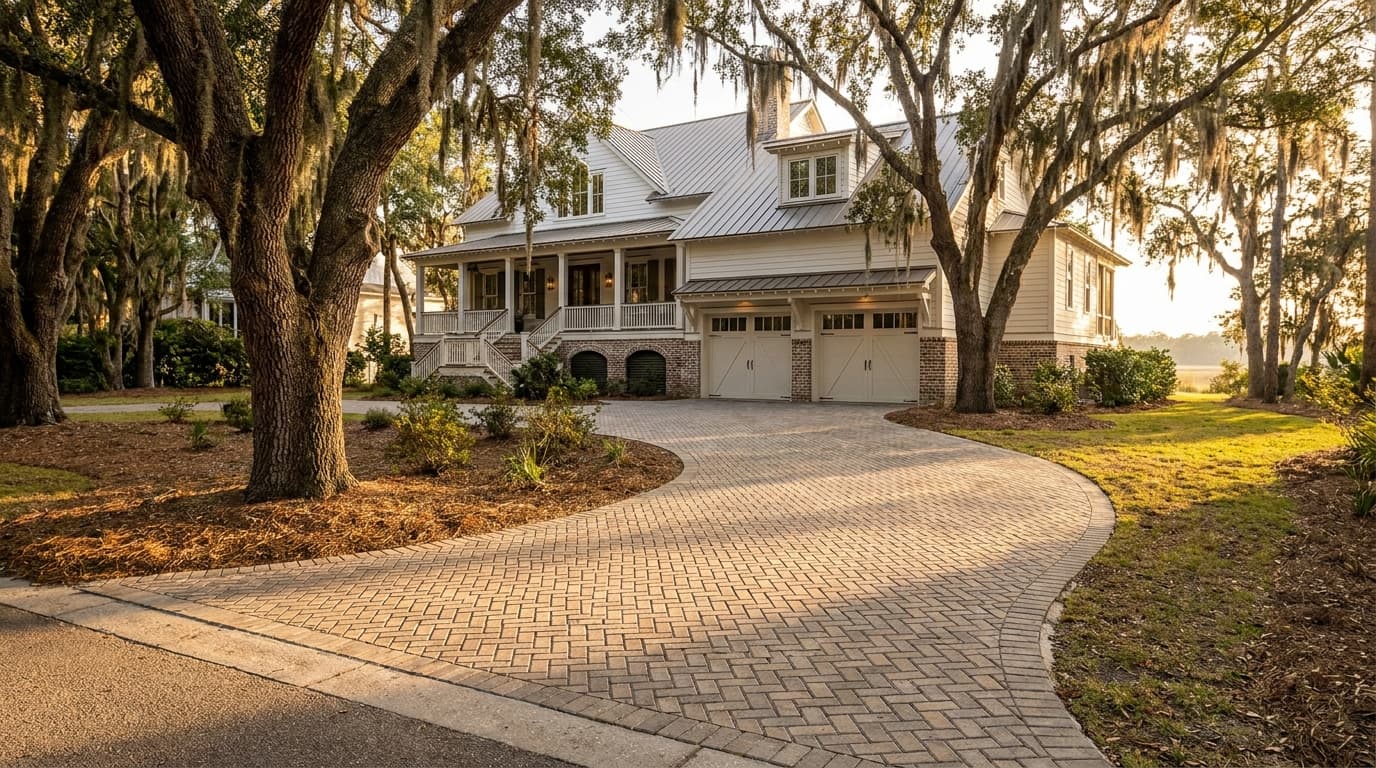
1. 45° Herringbone — The Strongest Pattern
Rectangular pavers set at 45 degrees create the tightest interlock, so tire loads transfer across many angled joints instead of running down one line. It is the pattern paver pros reach for first on any surface a vehicle will cross.
Lowcountry note: In saturated, sandy soil, that interlock is what resists rutting and creep. Pair it with solid edge restraints and it will outlast the car.
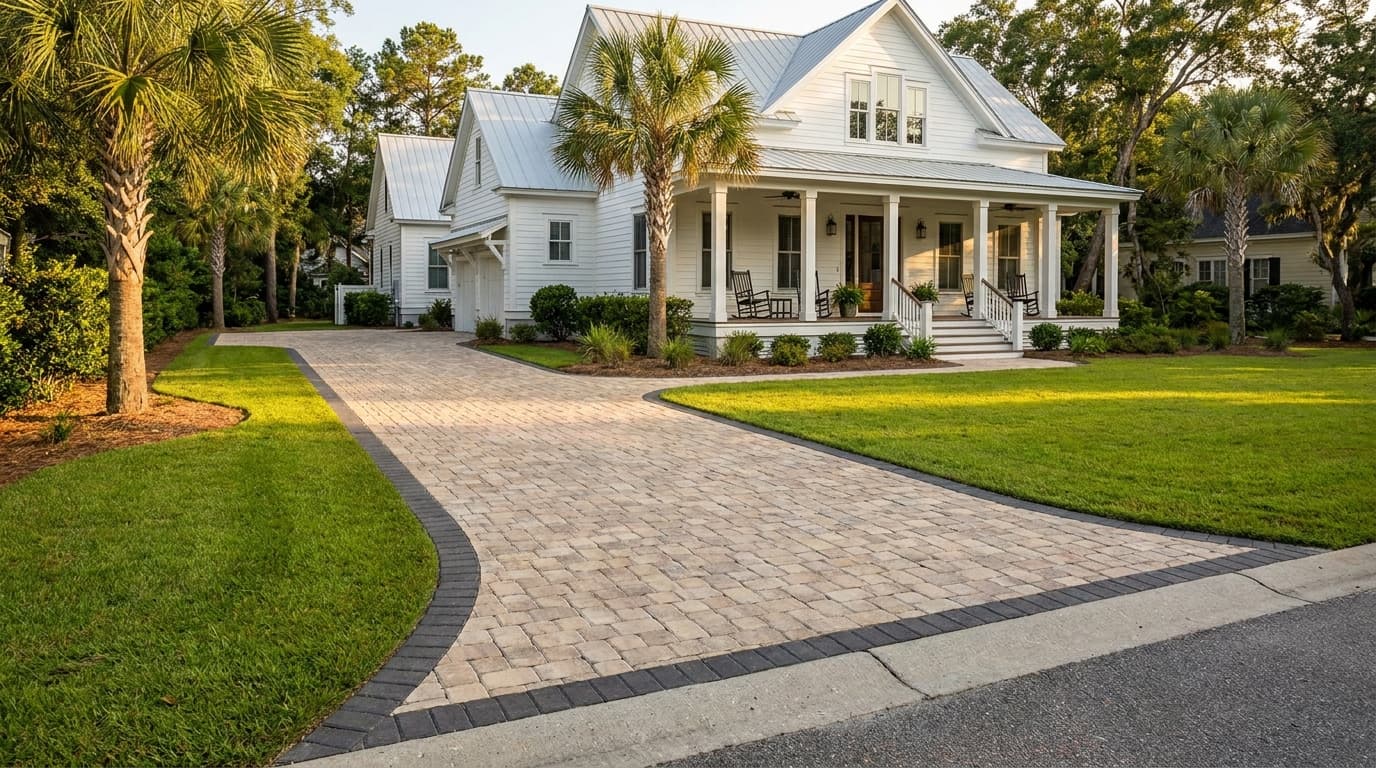
2. Contrasting Border & Banding
Frame the driveway with a two- or three-course border in a darker or differently textured paver. It defines the edges, adds depth, and hides the transition to lawn or planting beds — the most popular design upgrade on any driveway.
Lowcountry note: A soldier-course border doubles as a clean, stable edge line exactly where sandy soil meets the driveway and wants to creep.
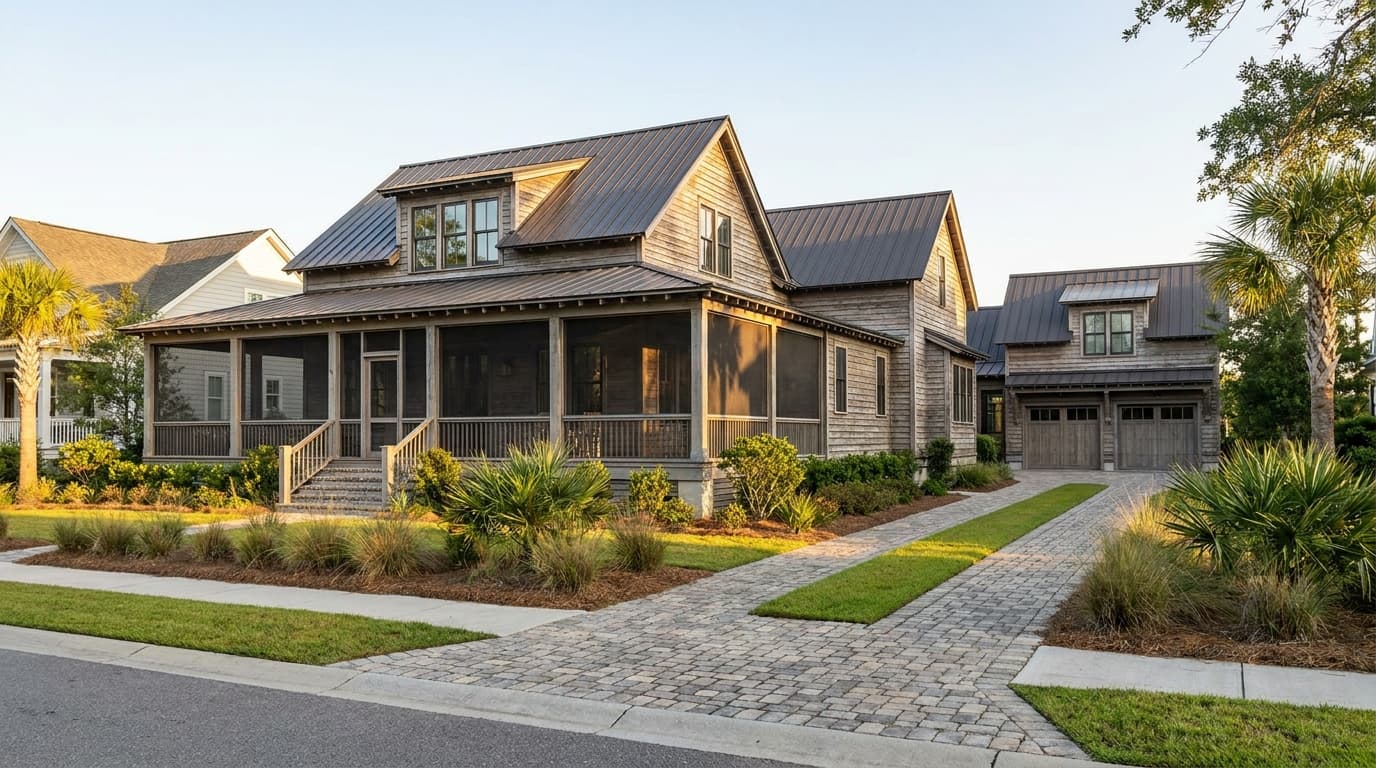
3. Ribbon / Tire-Strip Driveway
Two paver wheel tracks with a planted turf or gravel strip down the middle — softer, greener, and more permeable than a full surface. It reads modern or old-world depending on the paver you choose.
Lowcountry note: The open center adds drainage on flat, low lots and cuts impervious area — a smart, understated coastal move.
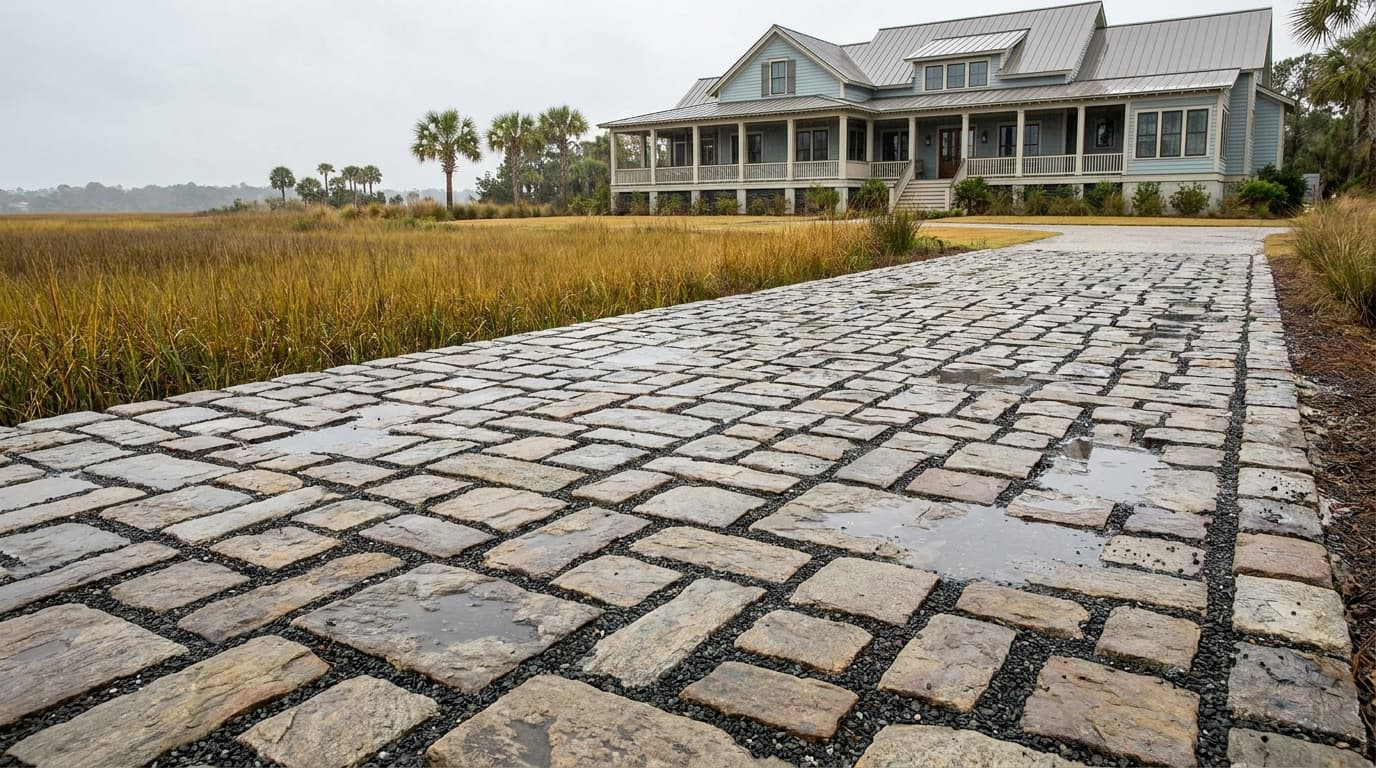
4. Permeable Driveway
Driveway-rated permeable pavers with aggregate-filled joints let stormwater infiltrate into a stone reservoir instead of sheeting to the street. The best choice for flood-prone or low-lying properties.
Lowcountry note: Reduces ponding and runoff during heavy coastal rain. Ask your local stormwater office about impervious-area requirements before you build.
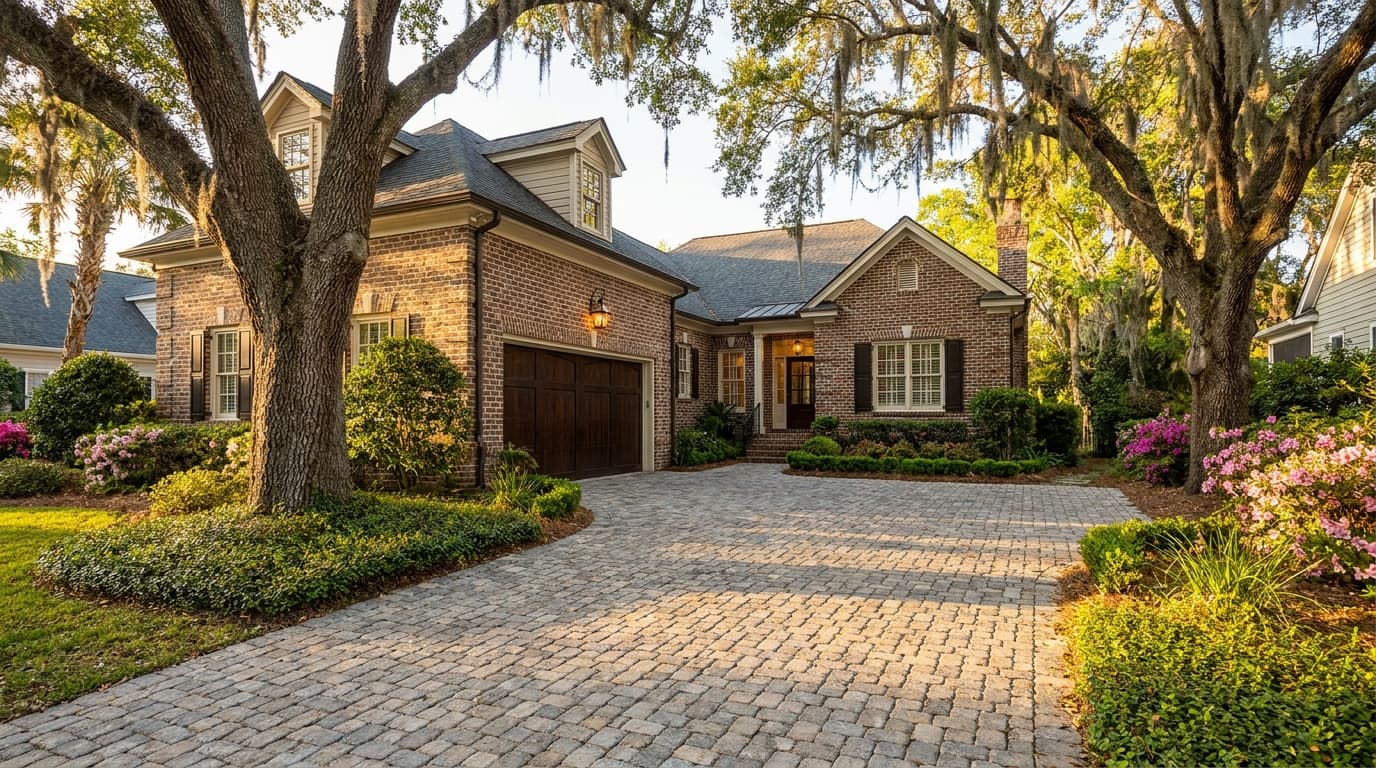
5. Cobblestone / Old-World
Tumbled, antiqued cobble-style units suit Charleston’s historic streets, Lowcountry cottages, and Beaufort’s character homes. The small format and worn edges hide wear and read timeless.
Lowcountry note: Small units and tight joints flex beautifully over shifting coastal subgrade — an old look that is quietly practical here.
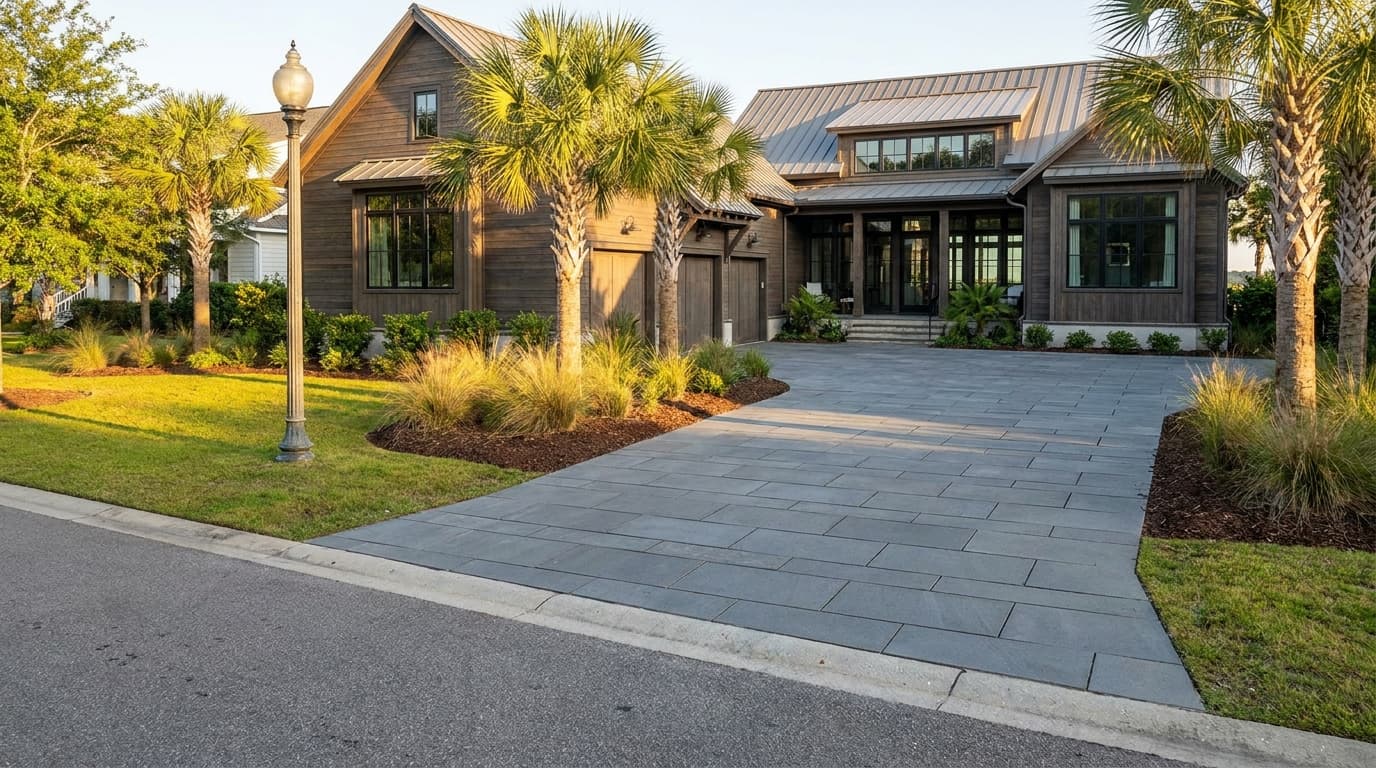
6. Large-Format Modern
Big, clean rectangular or square units in grey, white, or charcoal for a contemporary, minimalist entrance — the core "modern driveway pavers" look for new coastal builds.
Lowcountry note: Large formats need a dialed-in, deeper base to stay dead-flat on sandy soil, and a driveway-rated thickness. Get the base right and the payoff is striking.
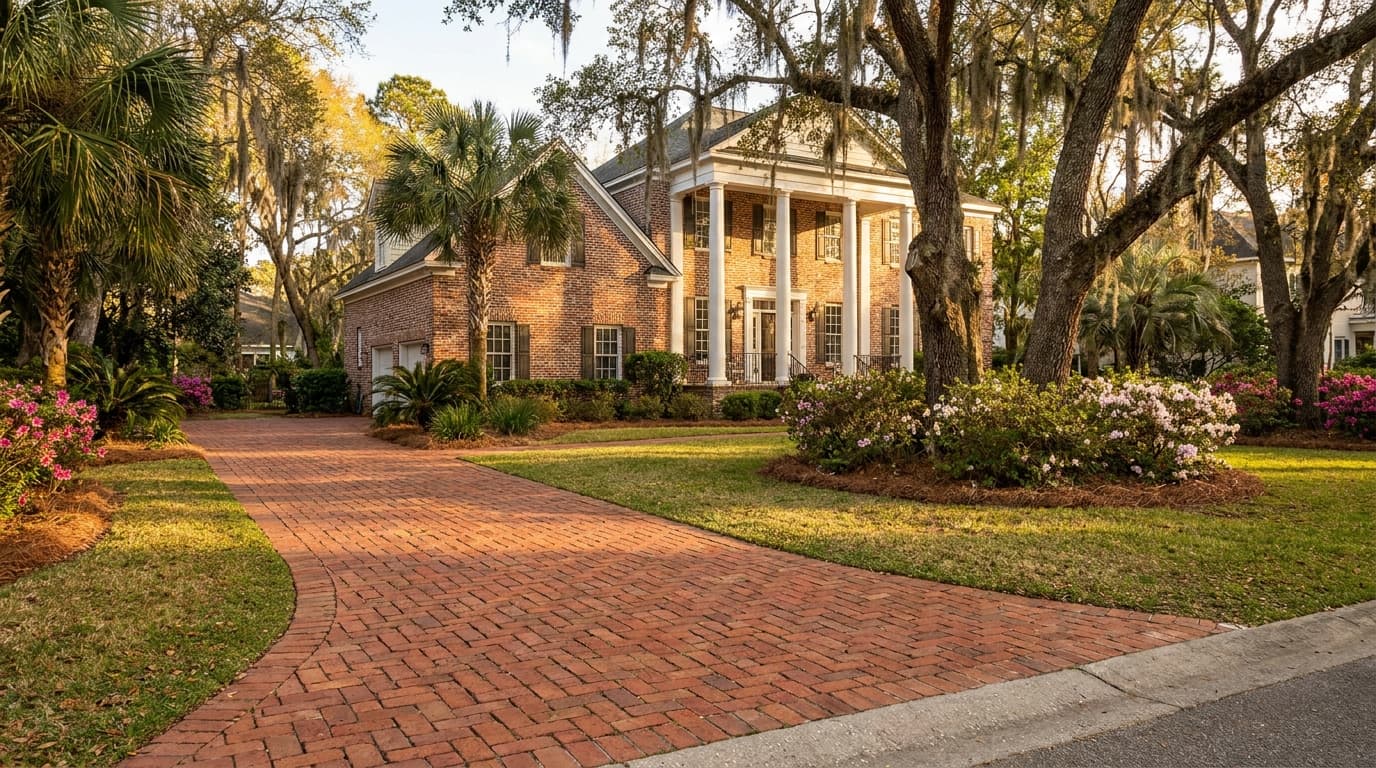
7. Clay Brick
Genuine clay pavers deliver rich, colorfast reds and a traditional Southern character. Because the color is baked all the way through, it holds up rather than fading over the years.
Lowcountry note: Clay’s kiln-fired color stands up to strong coastal UV and salt air better than surface-dyed products.
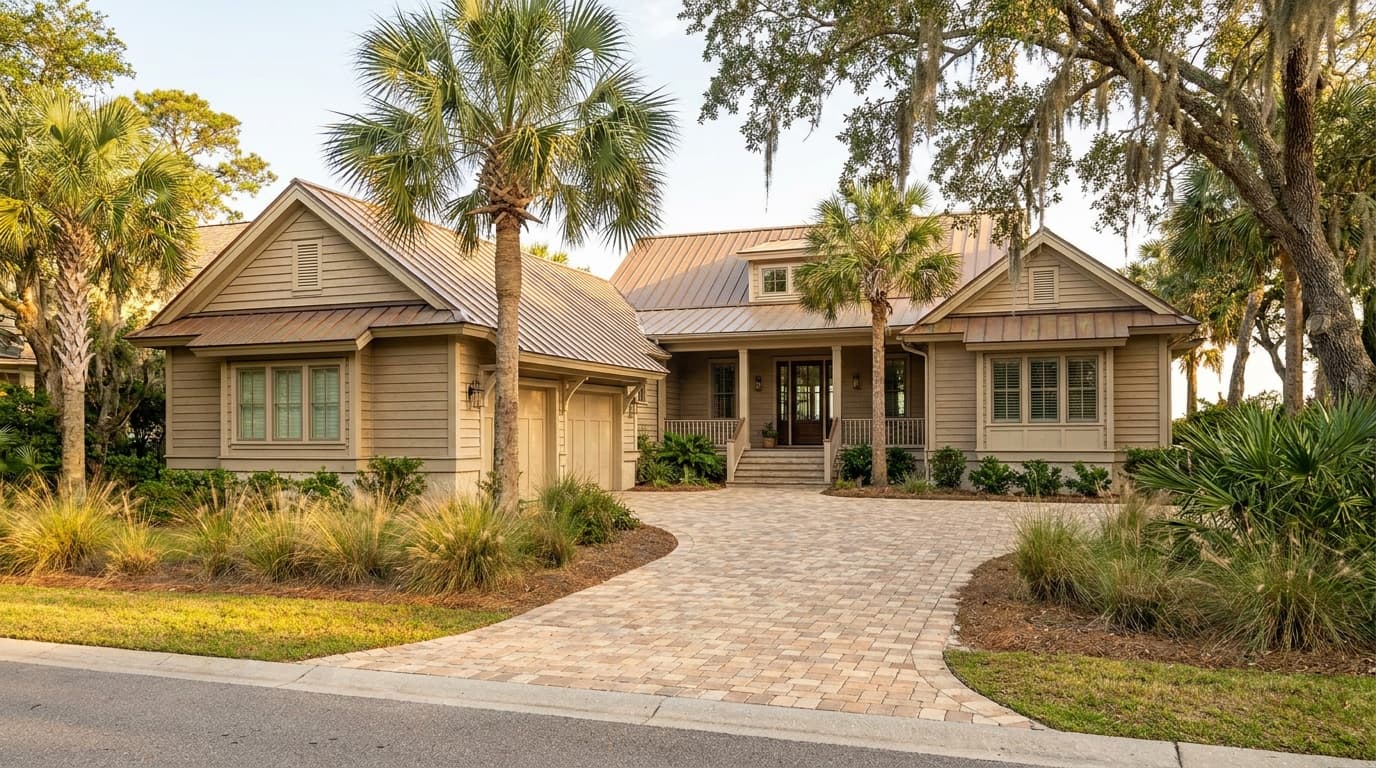
8. House-Matched Color Blend
Pull the driveway’s paver color from the roof or trim for a cohesive, high-end approach. Multi-tone blends read like natural stone and keep the whole facade feeling designed.
Lowcountry note: Warm sand-and-buff blends flatter Lowcountry exteriors and hide the coastal dust and pollen that show on a single flat tone.
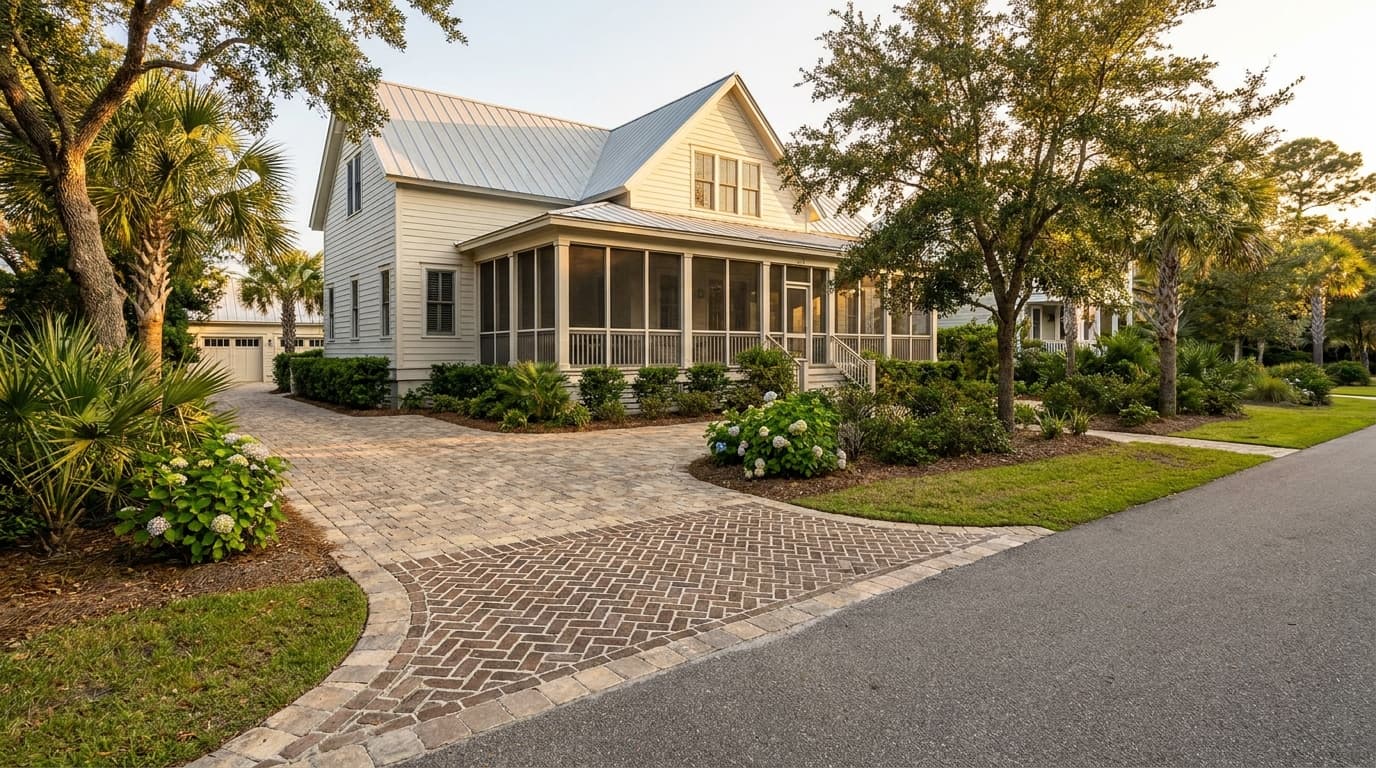
9. Entrance / Apron Accent
A distinct pattern or contrasting inlay at the street apron or the garage "carriage drop" makes a focal point without repaving everything. A small area that carries a lot of the first impression.
Lowcountry note: The apron takes the hardest turning loads, so we lay herringbone here — the accent adds strength exactly where the driveway needs it most.
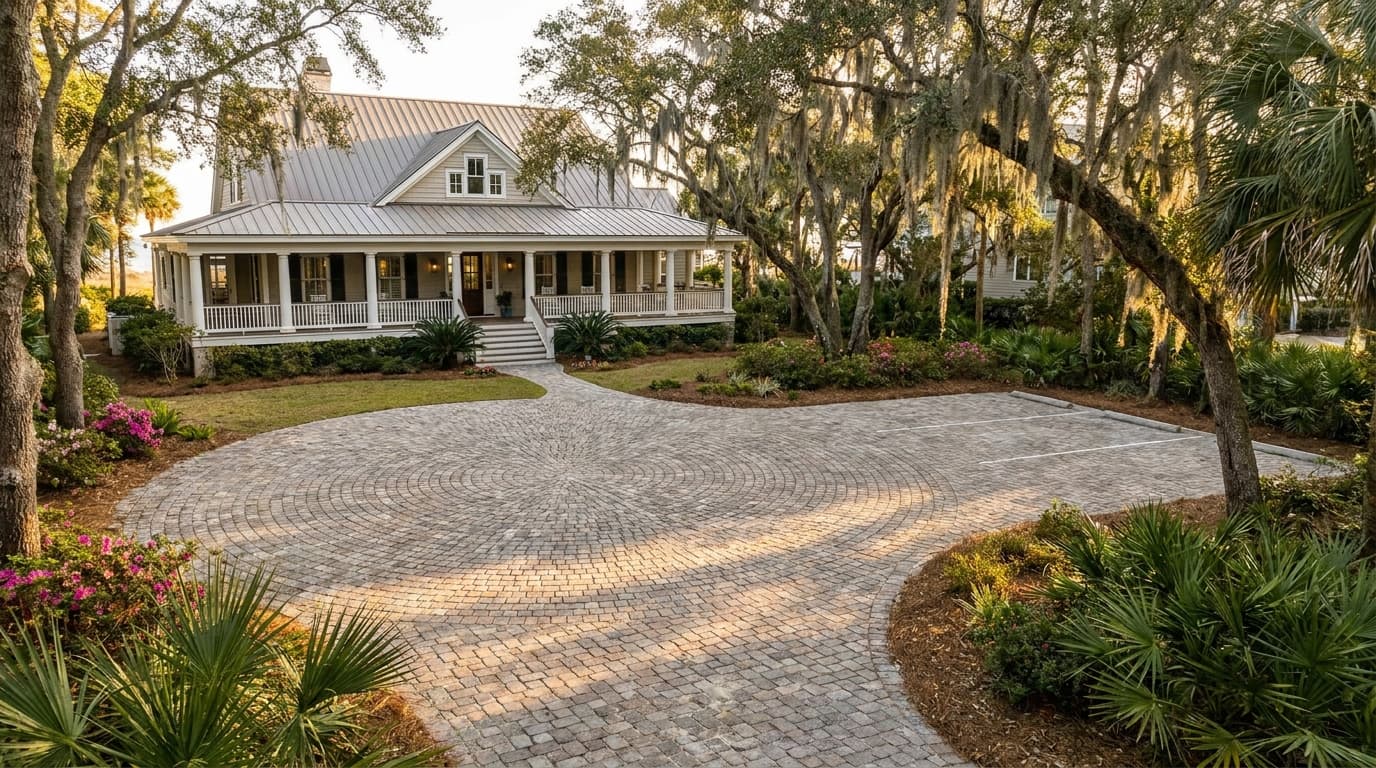
10. Circular / Motor-Court Driveway
A circular kit or radial pattern for a sweeping, estate-style approach, or a widened motor court for extra parking and an easy turnaround. The grand-entrance move on a larger lot.
Lowcountry note: Great for the bigger properties around Mount Pleasant and Hilton Head — just plan the drainage fall carefully across the wider surface.
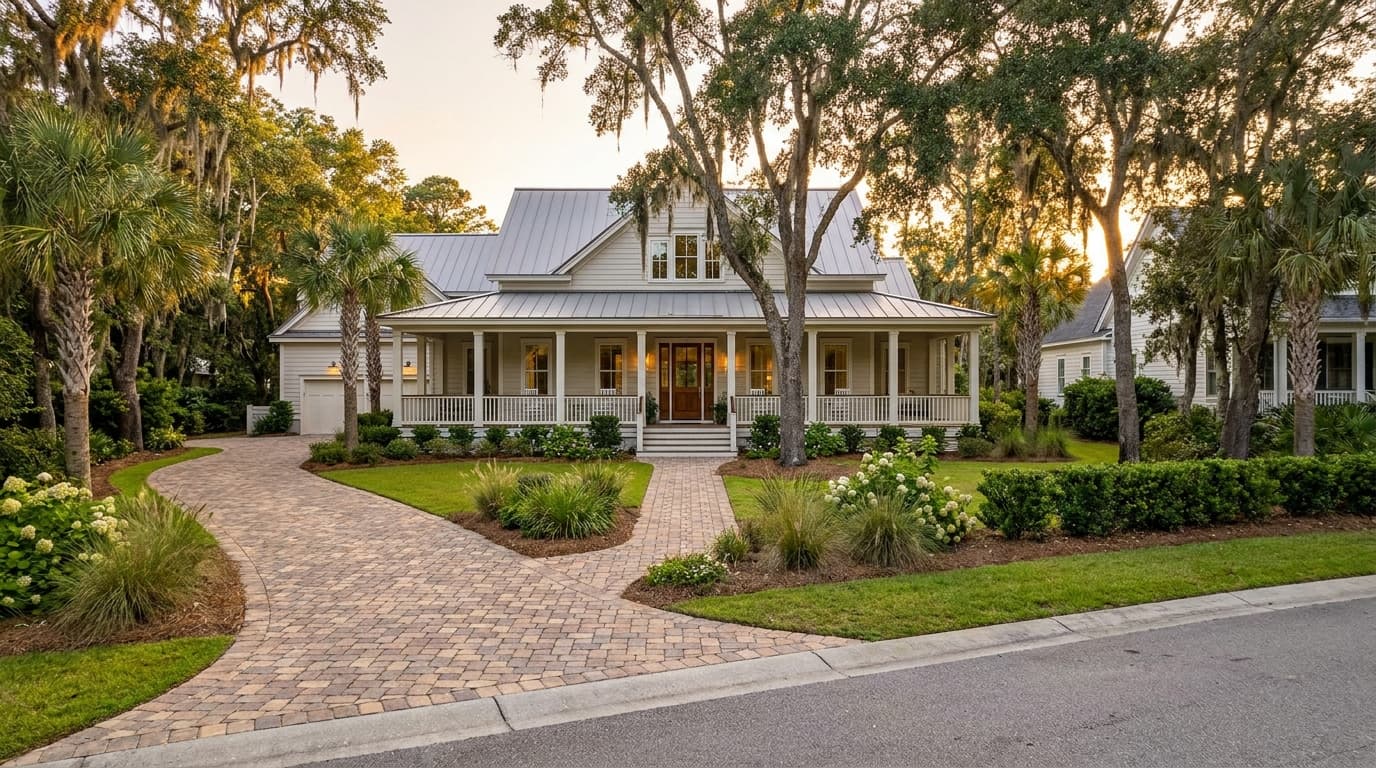
11. Driveway-to-Entry Walkway
Carry the driveway paver — or a coordinating one — into the front [walkway](/pathways-and-steps/) so the whole approach reads as one designed surface from street to door.
Lowcountry note: One continuous hardscape means one consistent base and drainage plan, which is exactly what you want on a low coastal lot.
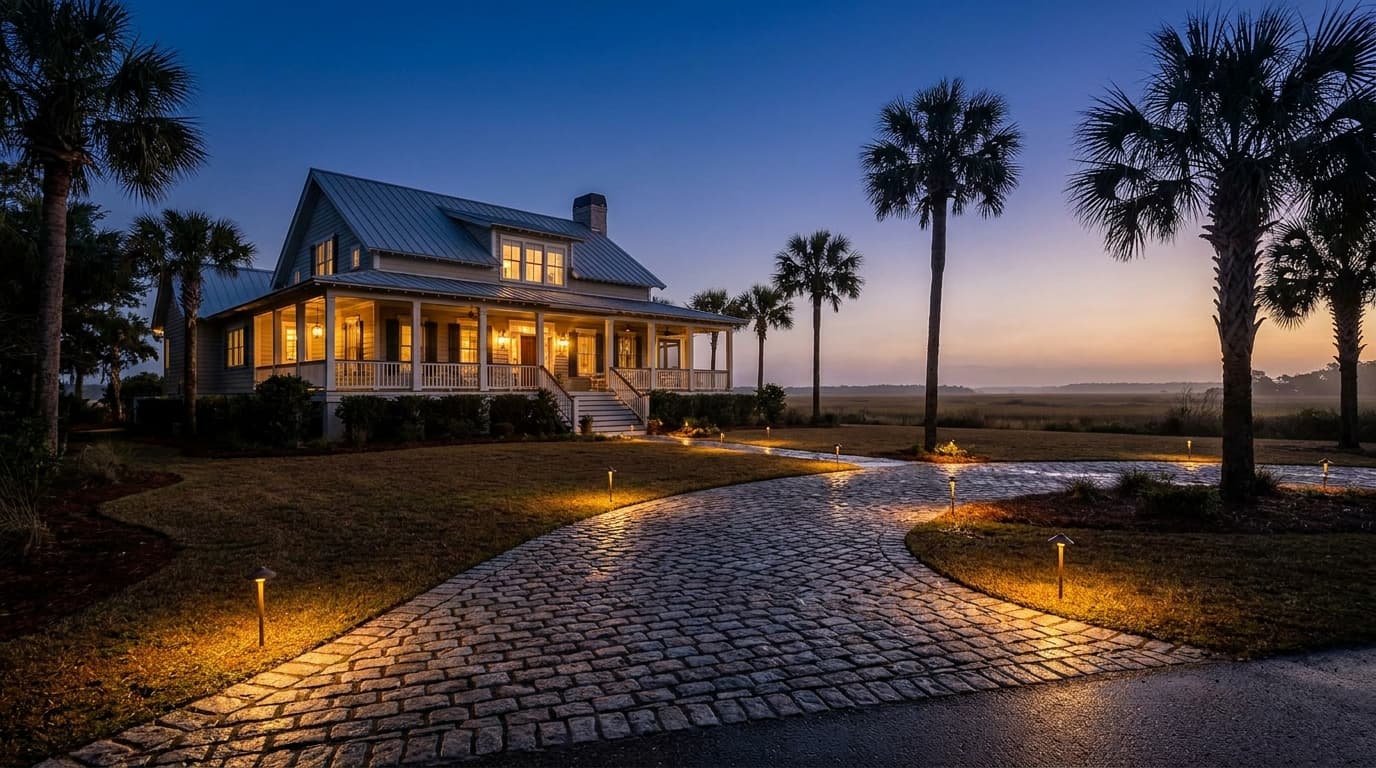
12. Driveway Lighting
Low-voltage path or in-paver lights along the borders and entry add safety and real nighttime curb appeal. A finishing touch that makes a long approach feel intentional after dark.
Lowcountry note: Mark edges and grade changes on long coastal drives, and specify fixtures rated for humid, salt-air conditions so they last.
What a Paver Driveway Costs — and What It Returns
Installed paver driveways run $22–$40 per square foot from uninsured and unlicensed installers; $50–$100 per square foot from a licensed, bonded and insured contractor with a workmanship guarantee. To be honest about the alternatives we do not install: asphalt (roughly $6–$13 per square foot) and poured concrete (roughly $10–$16 per square foot) are cheaper up front than a professionally installed paver driveway at $50–$100 per square foot. The paver case is lifetime value, not the lowest sticker price — pavers are repairable without scars, they outlast asphalt and concrete on our coastal subgrades, and they carry our 10 Year Workmanship Guarantee.
That lifetime value is real. Paver driveways commonly last 30 to 50 years or more, versus roughly 15 to 20 for asphalt and 25 to 40 for concrete — and because they are segmental, a damaged unit is swapped individually instead of resurfacing the whole drive, with no reflective cracking to chase. The driveway is also one of the largest surfaces at your curb, so it carries real weight in first impressions: industry estimates put a new or upgraded driveway around 50–75% cost recovery (paver driveways at the top of that range), and the National Association of Realtors consistently finds curb appeal strongly shapes how buyers value a home. Treat those as directional signals, not guarantees. For a deeper look, see can a paver driveway improve property value and our paver driveway cost guide.
Plan Your Driveway
Related Reading
Frequently Asked Questions
Are pavers good for driveways?
Yes — driveway-rated interlocking pavers handle repeated vehicle loads without cracking because they flex on sand-filled joints, and you can drive on them right after installation with no curing wait. The key is using a driveway-rated paver over a proper base, not a patio-only unit.
How thick should driveway pavers be?
For residential light-vehicle driveways, use at least 60mm (2⅜") driveway-rated pavers; ICPI/CMHA specifies 80mm (3⅛") for heavier or commercial traffic. Thickness matters, but base preparation matters even more.
How deep should the base be under a paver driveway?
Plan on roughly 8–12 inches of compacted aggregate base for a driveway — about double a patio’s 4–6 inches — over compacted subgrade, and deeper for weak soils or poor drainage. On sandy Lowcountry lots, that base is what prevents settling.
How much does a paver driveway cost?
Expect $22–$40 per square foot installed from uninsured, unlicensed installers, and $50–$100 per square foot from a licensed, bonded and insured contractor offering a workmanship guarantee. On a 600 square foot driveway that is roughly $13,200–$24,000 at the low end of the market versus $30,000–$60,000 professionally installed. Material, size, pattern complexity, subgrade composition, projected vehicular loading, and dry set versus permeable methodology all move the number.
What is the best paver pattern for a driveway?
Herringbone at 45 or 90 degrees. It is the strongest layout for vehicular loads because the interlock spreads tire forces across many joints, and it is the pattern ICPI/CMHA recommends for traffic, usually with a soldier- or sailor-course border to hold the edges.
Do paver driveways crack?
Individual pavers rarely crack, because the jointed system flexes and releases pressure instead of fracturing like a poured slab. When damage does happen — almost always from a poor base — you replace a single paver rather than resurfacing the whole driveway.
Are permeable pavers worth it for a driveway?
On flat, low, or flood-prone lots they are worth a serious look: they let rain infiltrate instead of running off, cutting ponding and impervious area. Check your local stormwater requirements, since many municipalities recognize permeable surfaces in their rules.
How do you maintain a paver driveway?
Sweep and rinse it, treat oil spots promptly, keep the joint sand topped up, and reseal roughly every 1–2 years to guard against stains and wear. In coastal areas, rinse off salt-air residue periodically to protect the finish.
Found an idea you love?
We will walk your site, talk through what holds up in your specific spot of the Lowcountry, and put a real number on paper. Free on-site assessment, no obligation.