The short answer
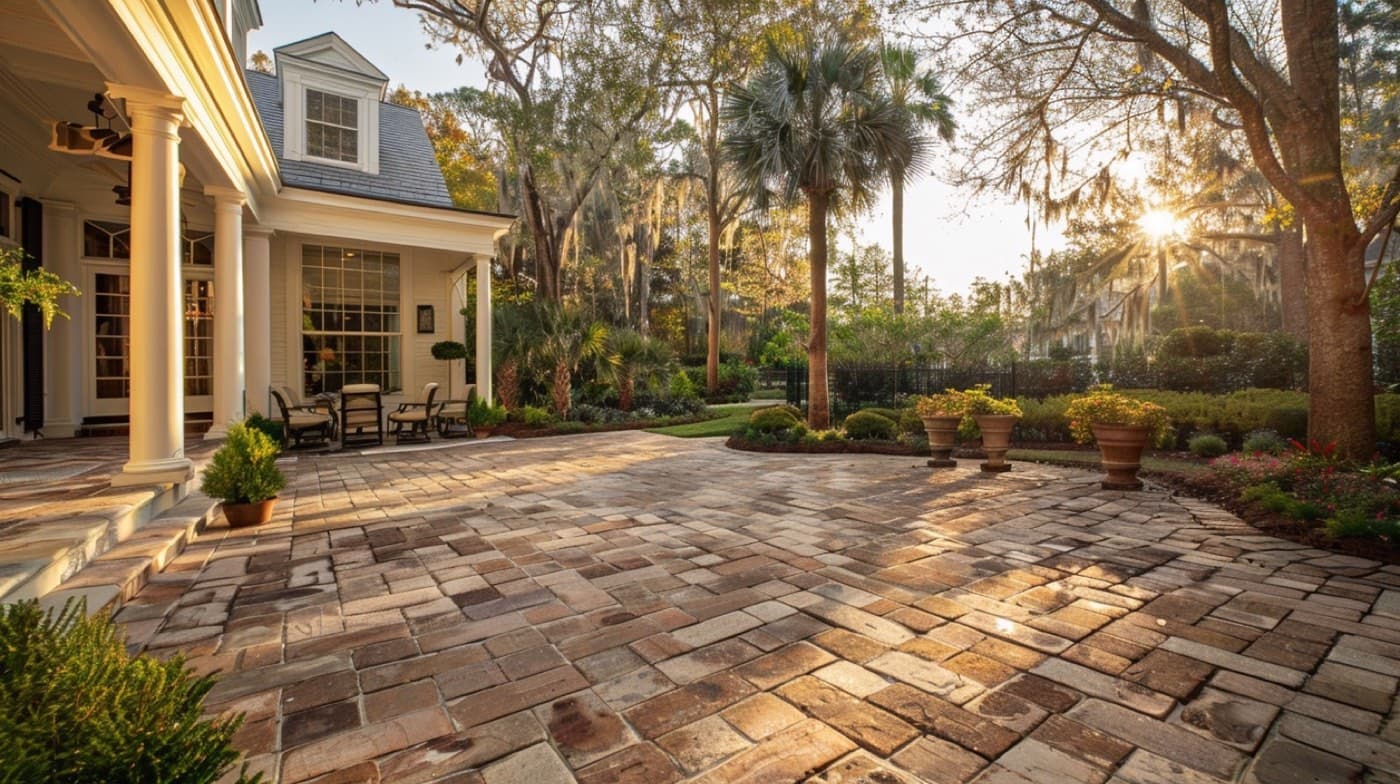
The best paver patio ideas for the South Carolina and Georgia Lowcountry combine a strong pattern (herringbone is the most durable), a contrasting border to make the design look custom, and a dense, low-absorption paver that shrugs off salt air and UV. Below are 14 ideas — from budget running-bond patios to multi-level outdoor rooms with fire pits and outdoor kitchens — each with a note on what makes it last on the coast. Uninsured and unlicensed installers quote most patios at $20–$35 per square foot; a licensed, bonded and insured contractor offering a workmanship guarantee will generally be $35–$65 per square foot. A new patio recovered roughly 95% of its cost at resale in the National Association of Realtors' 2023 Outdoor Features report.
How to Choose a Paver Patio Idea That Survives the Lowcountry
Almost every "paver patio ideas" article you will find online is written for a cold-climate yard, where the enemy is freeze-thaw. Here in the Lowcountry the enemies are different: salt air, brutal summer UV, sandy soil that shifts, and torrential rain that wants to wash your joints out. After installing patios from Mount Pleasant to Hilton Head to Savannah, we have learned that the design choices that look great in a national magazine are not always the ones that hold up here. So before the ideas, here is how we steer every coastal patio.
Pick a dense, low-absorption paver. In salt air, the material matters more than the color. Porcelain pavers have the lowest water absorption and resist salt and stains; high-density concrete pavers, shellstone and coquina (a regionally authentic crushed-shell limestone look), and granite all hold up well. Travertine is prized near pools because its porous surface lets heat escape and stays cooler underfoot — but it is softer and more absorptive, so it needs sealing and a little more maintenance in this climate.
Choose color for heat and glare, not just looks. Light, blended neutrals stay cooler underfoot and hide the sand and pollen the Lowcountry throws at them. Avoid a single very-pale tone, which shows glare and salt residue; instead, ground a light field with a darker accent border. That one move keeps a patio from looking washed-out and makes it read more expensive at the same time.
Joints, Base, and Drainage — Where Coastal Patios Live or Die
Joint sand is a real decision here. On open patios and pool decks, a coastal-rated polymeric sand resists washout in heavy summer downpours far better than plain joint sand, which needs topping off every season. The honest tradeoff: polymeric sand can trap moisture, and in a hot, humid climate that can invite mold or algae if water has nowhere to go. The fix is not to skip it — it is to pair it with good drainage. (If you want the full breakdown, we wrote a guide on what polymeric sand is and how it behaves on the coast.)
Base prep and grading are non-negotiable on sandy, flat lots. Lowcountry soil shifts and our lots sit low, so longevity comes down to proper excavation, a well-compacted aggregate base, surfaces graded to push water away from the house, and solid edge restraints. Skip any of those and the prettiest pattern in the world will settle, heave, and creep. This is the part of a patio you never see — and the part that separates a patio that lasts 30-plus years from one that fails in five.
Consider going permeable on flood-prone sites. Permeable paver systems let stormwater filter down through enlarged, aggregate-filled joints into a stone reservoir below, cutting standing water, runoff, and erosion. On a high-water-table or flood-conscious lot, that is one of the smartest patio ideas you can choose. And because pavers are segmental, a unit that settles after a storm can be lifted and reset — you are never stuck with a cracked slab.
14 Paver Patio Ideas
1. Herringbone Pattern
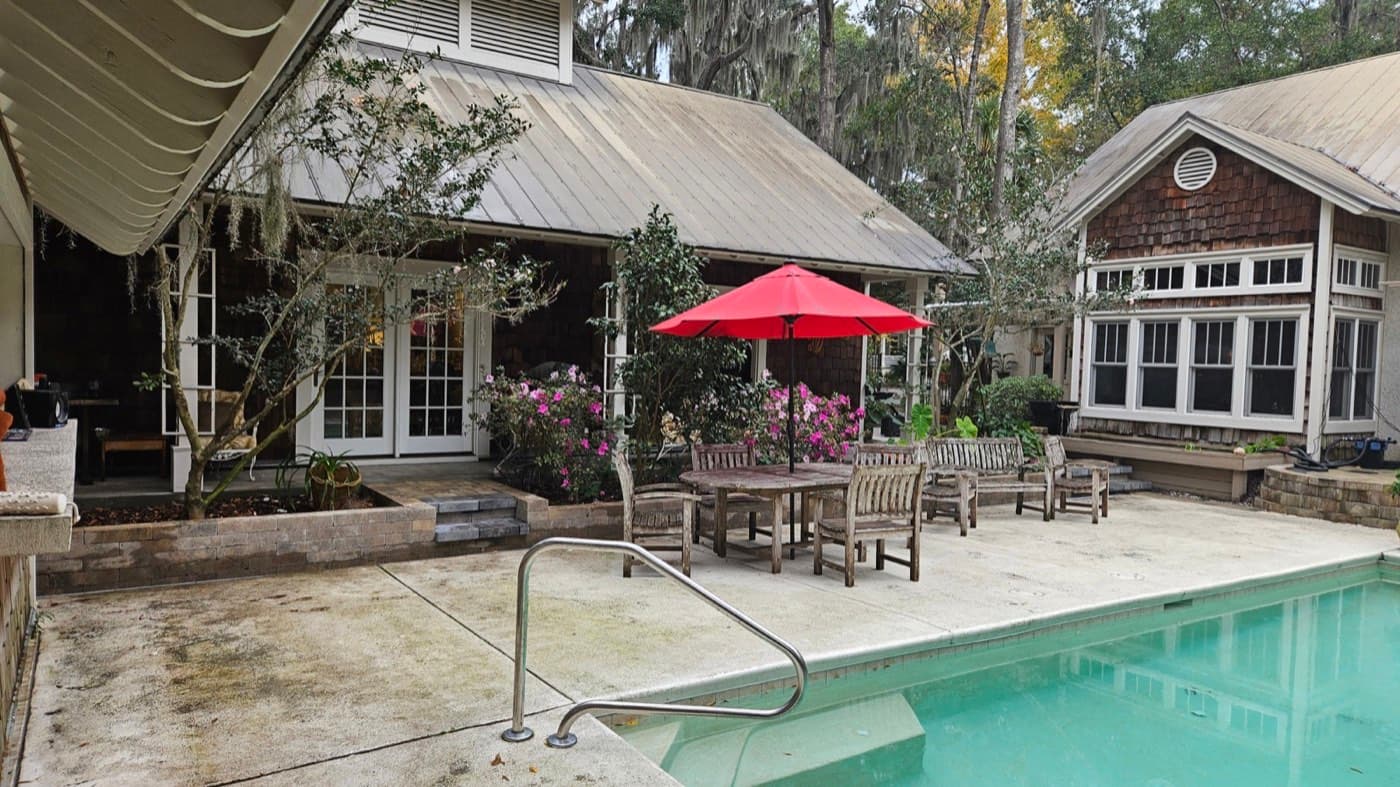
Rectangular pavers laid in an interlocking 45- or 90-degree zigzag. Herringbone is the strongest paver pattern because each unit is locked in place by six neighbors, so it resists shifting under foot traffic and furniture. The diagonal lines also trick the eye into reading the patio as wider than it is.
Lowcountry note: Our default for high-traffic patios and any surface that takes a load. The interlock fights the seasonal movement you get in sandy Lowcountry soil.
2. Basketweave Pattern
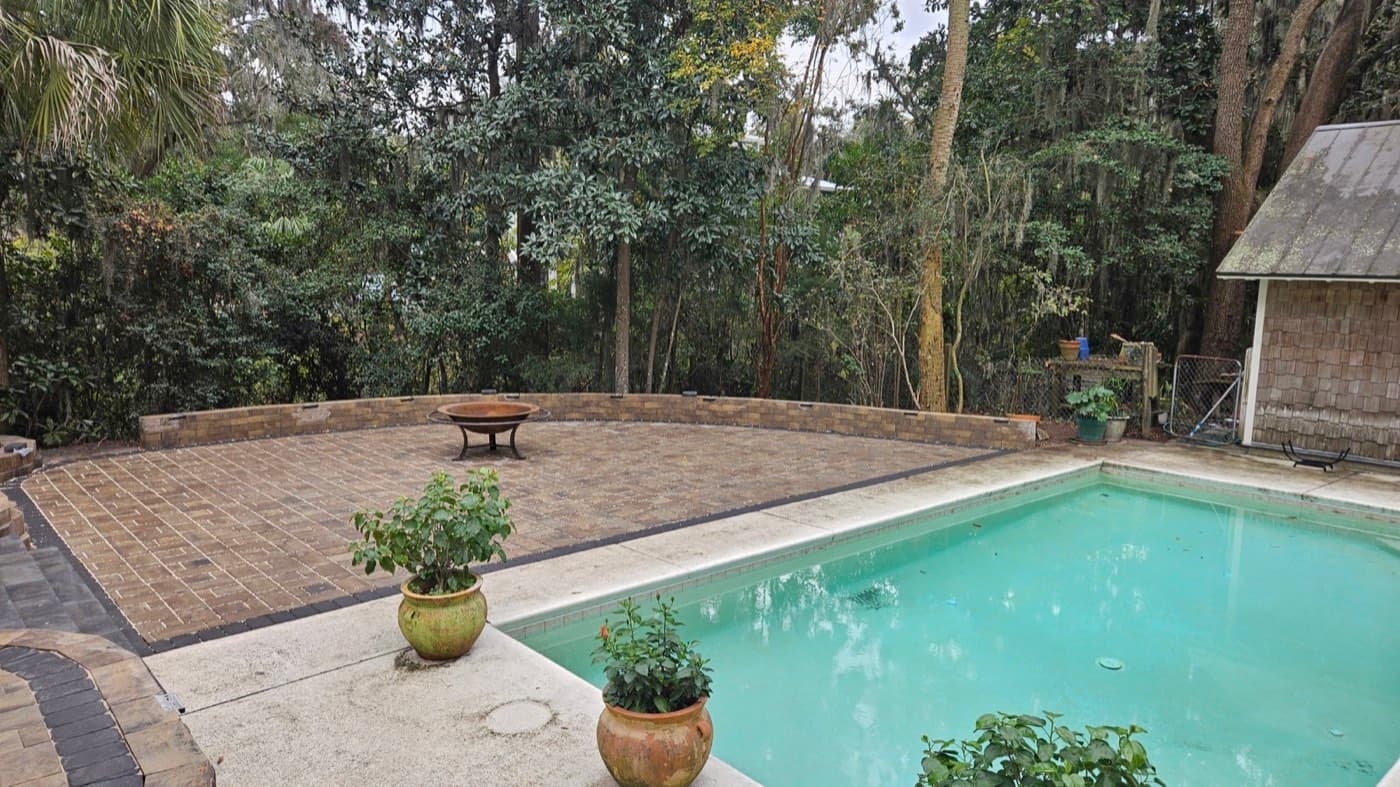
Pairs of pavers alternate horizontal and vertical to mimic woven strands. It reads traditional and old-world, pairs beautifully with brick, and is forgiving to lay because it uses simple square modules.
Lowcountry note: A natural fit for the historic districts of Charleston, Beaufort, and Savannah, where a woven brick look belongs.
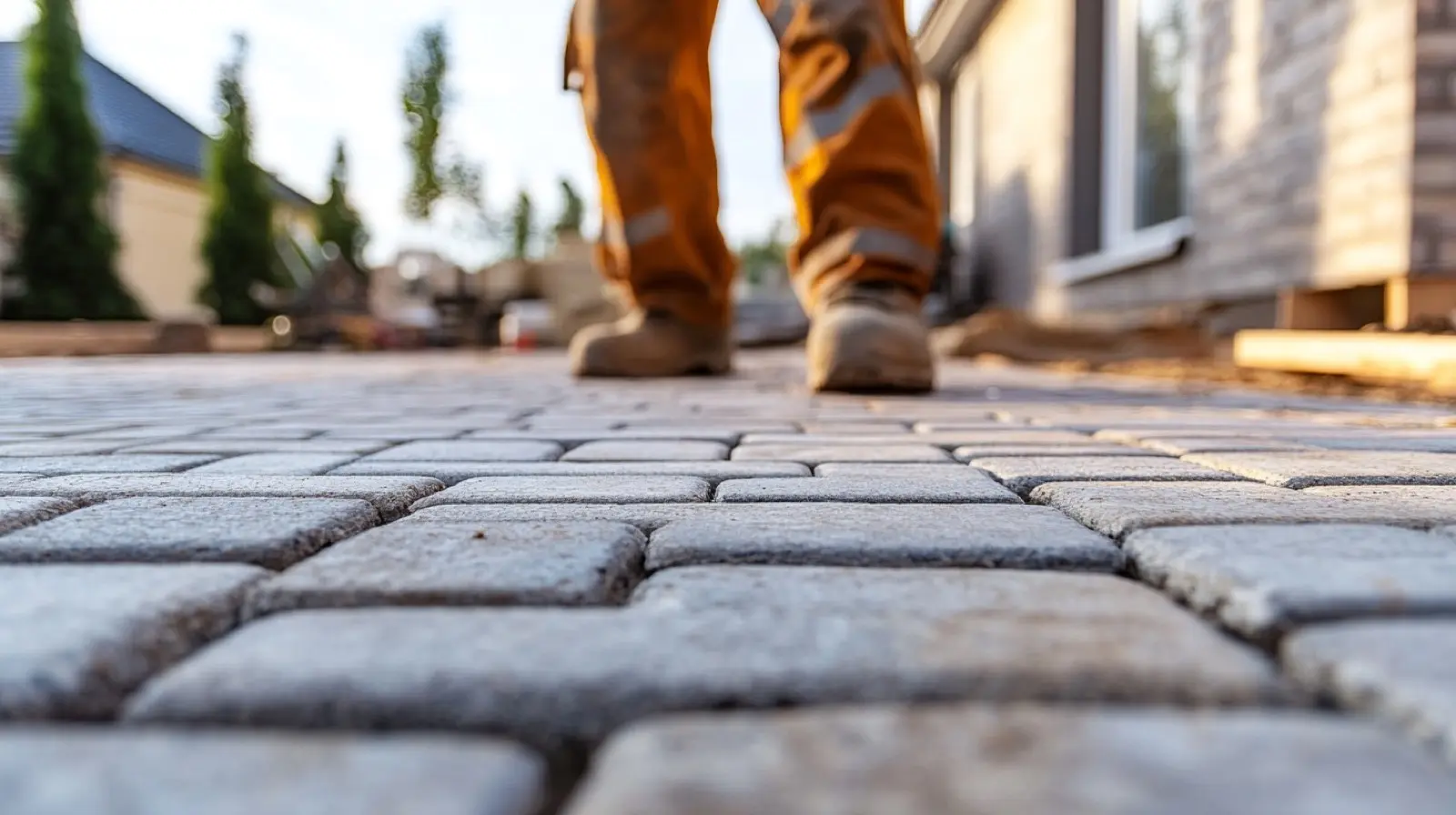
3. Running Bond (Budget-Friendly)
Rows offset by half a paver, like a brick wall laid flat. It is the easiest pattern to install with the least cutting and waste, which makes it the budget and DIY favorite. Long lines visually stretch a narrow space.
Lowcountry note: The most affordable way to a clean paver patio, and it pairs well with larger-format pavers near a water or marsh view.
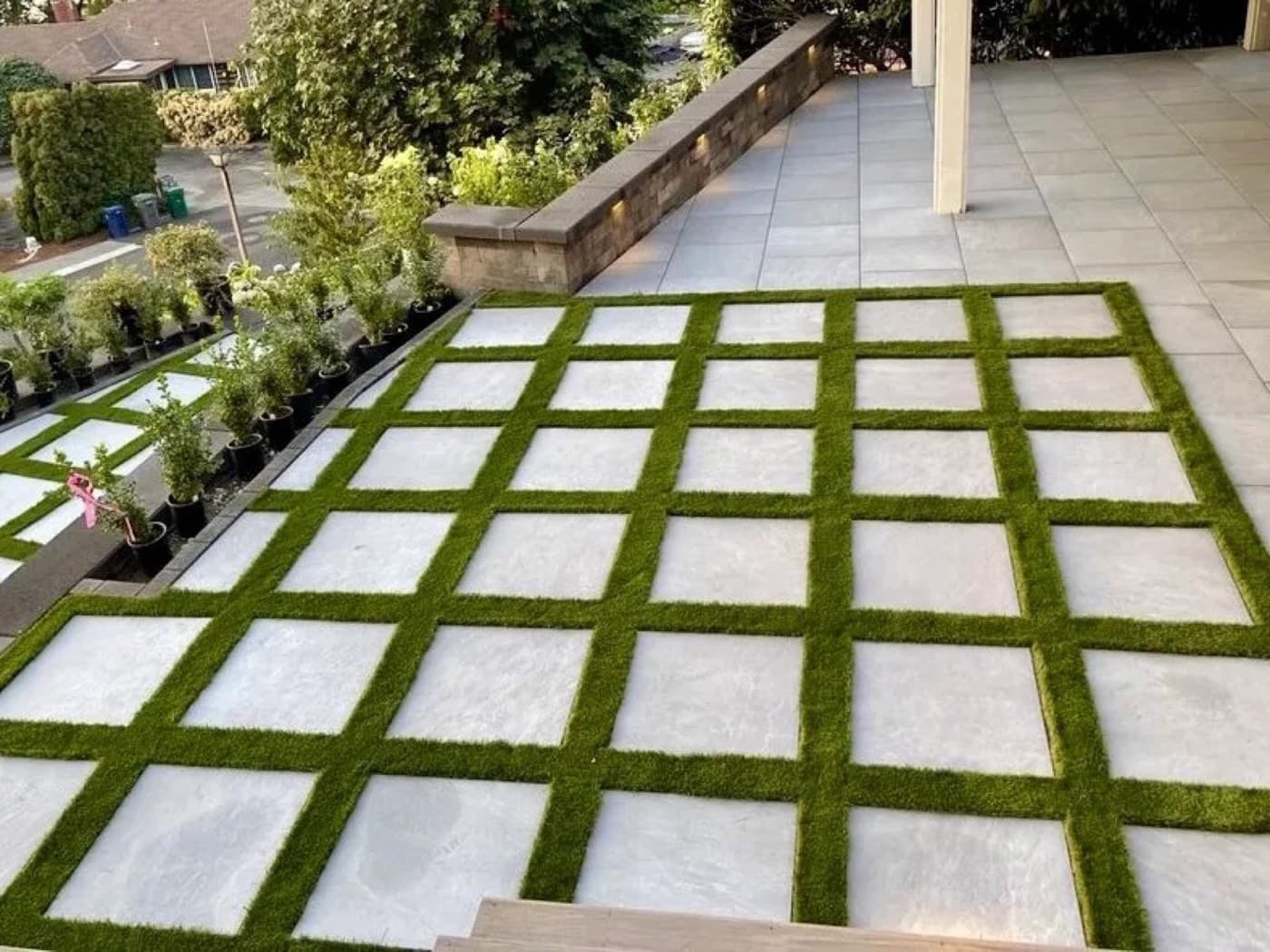
4. Large-Format Modern Slabs
Oversized rectangular or square pavers with thin, clean joint lines for a minimalist, monochromatic look. Fewer joints mean fewer places for weeds and sand washout, and the contemporary feel suits new coastal builds.
Lowcountry note: Frames marsh and water views without fuss. Fewer joints is also a maintenance win in our wind-driven rain.
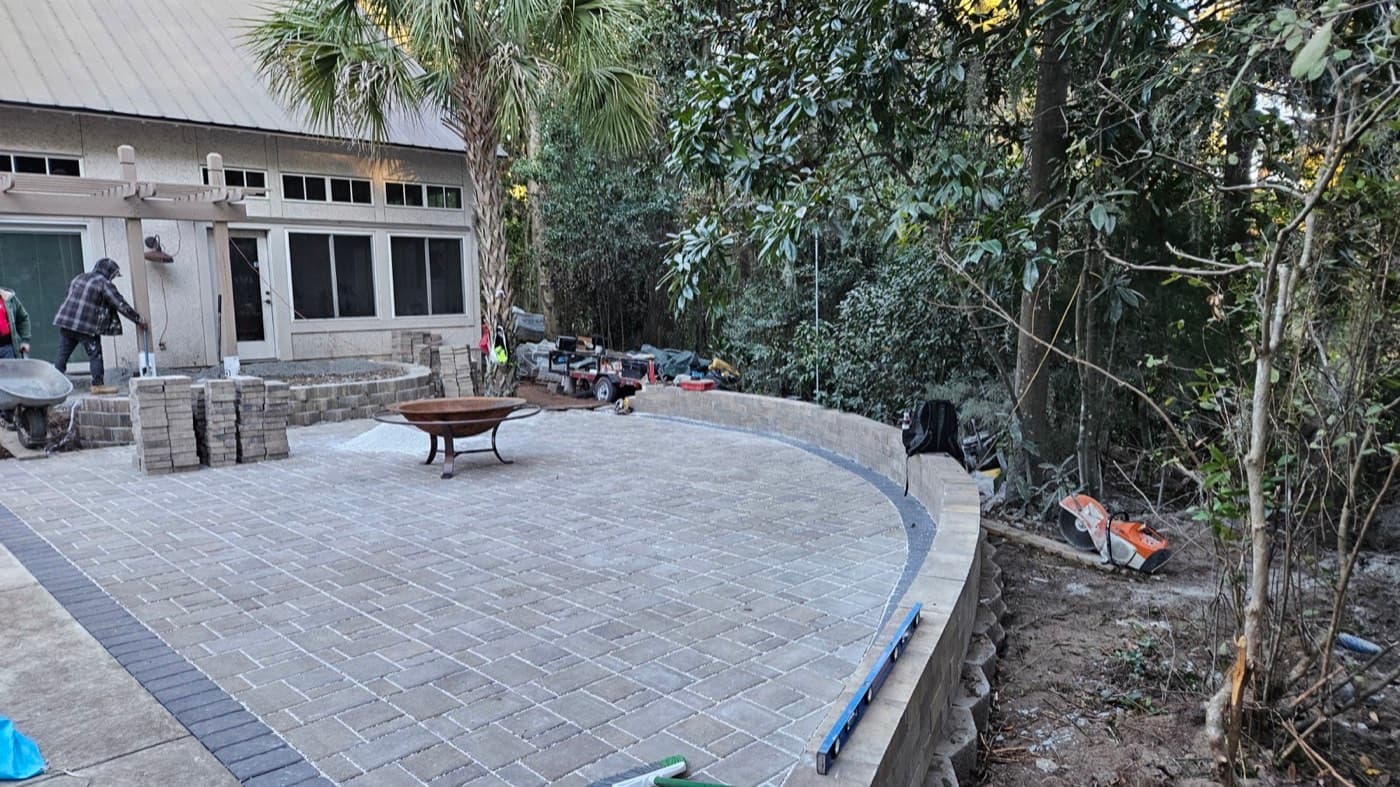
5. Multi-Level / Tiered Patio
Separate elevations connected by steps or low walls to define dining, lounging, and cooking zones. Steps and retaining walls double as seating and add architecture to an otherwise flat yard.
Lowcountry note: Tiering helps you manage grade and drainage on the low, flat lots common across the Lowcountry — function and good looks at once.
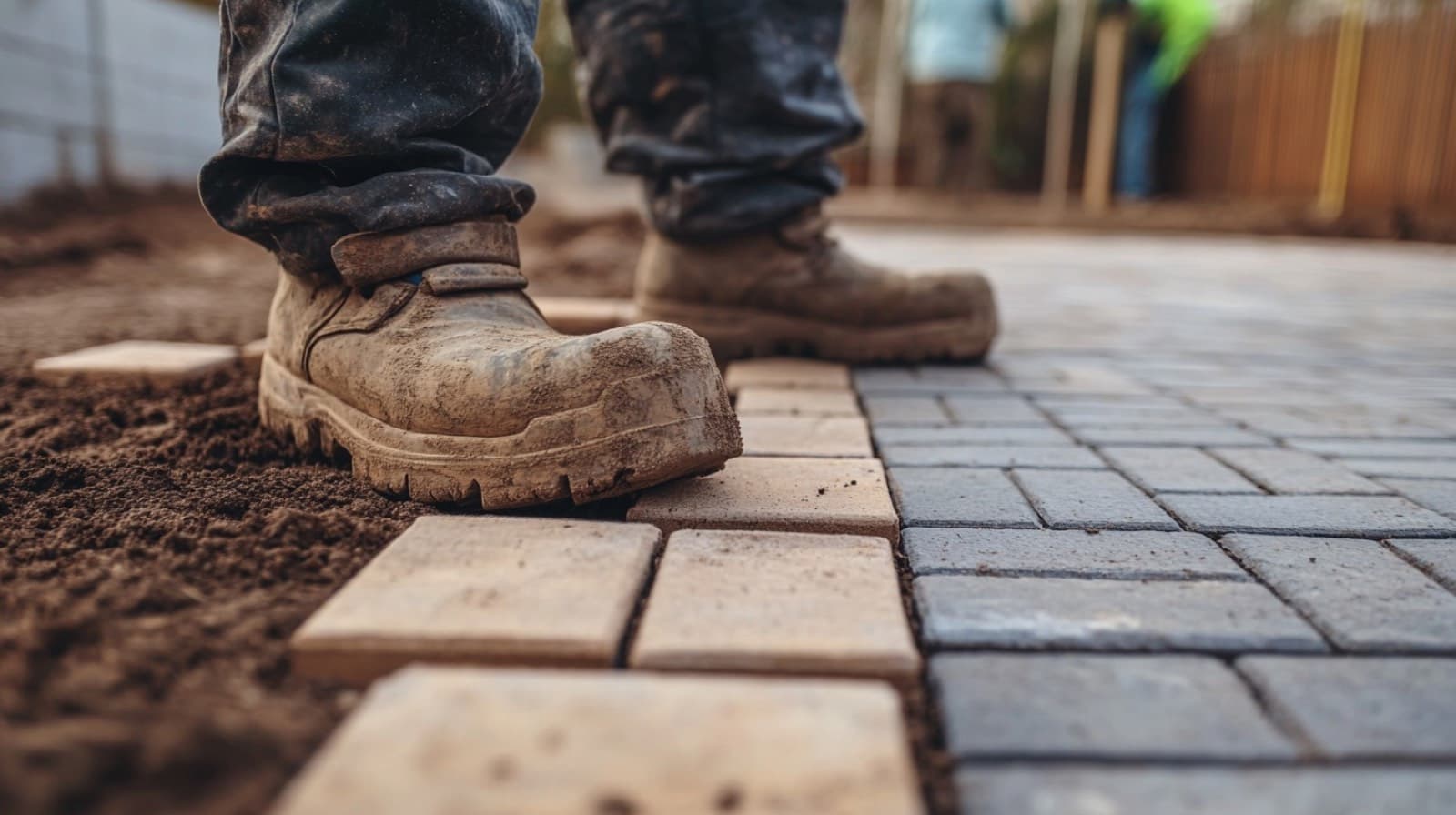
6. Border & Banding
A soldier-course or contrasting-color band frames the field pavers. It instantly makes a patio look custom and finished, visually grounds a lighter field, and reinforces the perimeter where pavers are most prone to creeping.
Lowcountry note: The single cheapest way to make a patio look expensive — and a dark border hides the salt residue and glare that plague very pale surfaces here.
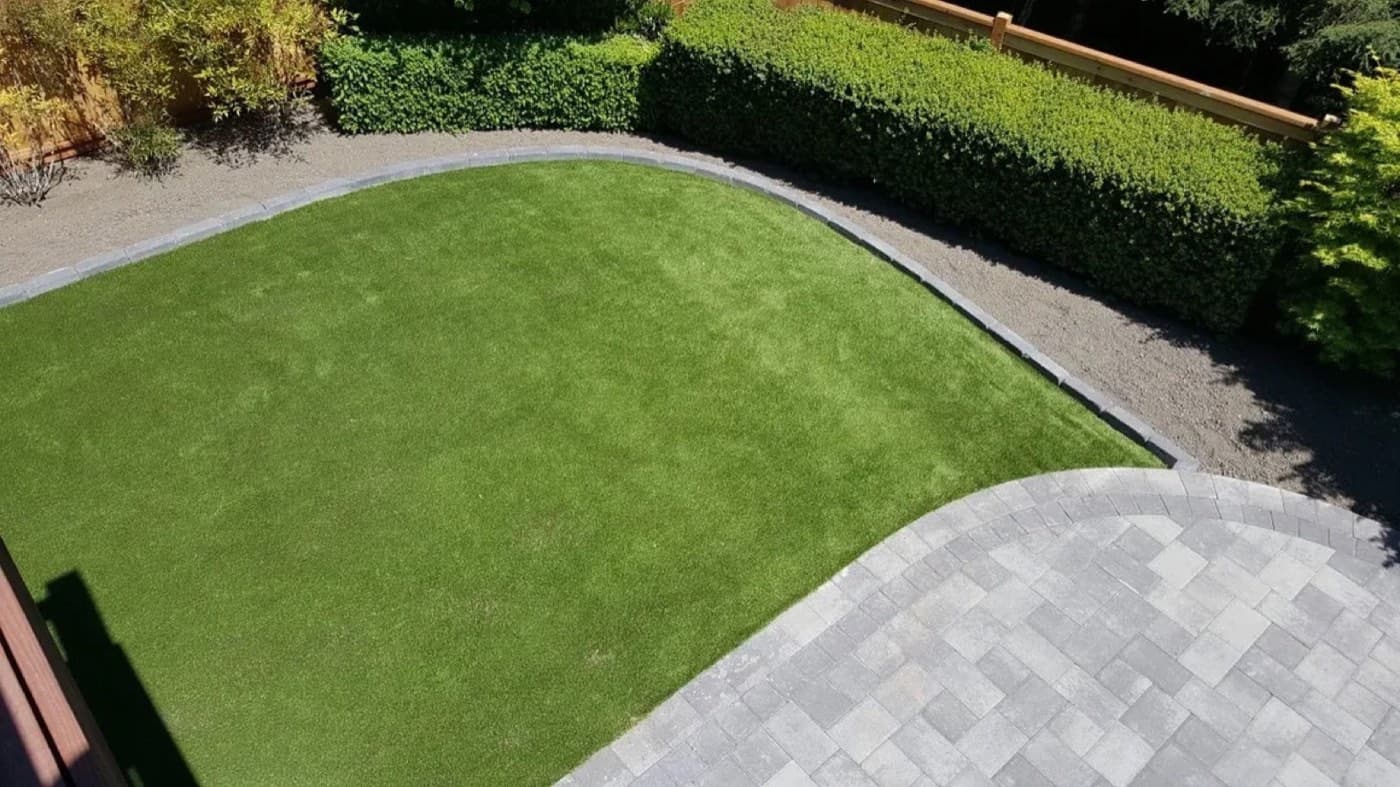
7. Mixed Materials
Combine concrete or clay pavers with travertine accents, wood-look porcelain, artificial turf inlays, or gravel infill. Texture contrast adds depth and lets you spend on a small premium accent instead of the whole field.
Lowcountry note: A turf-and-paver mix is a Lowcountry favorite: soft green between clean lines, with better drainage than a solid slab.
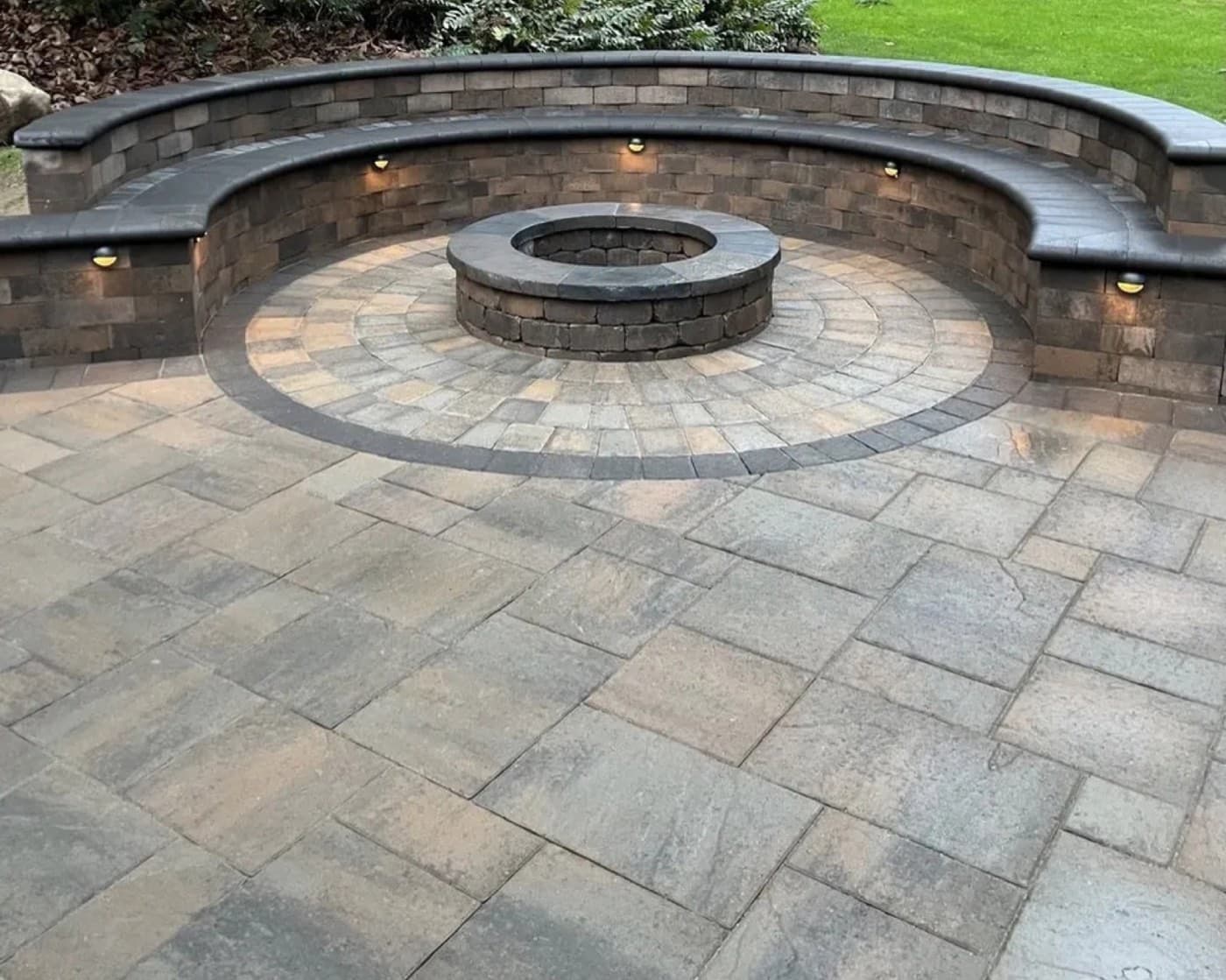
8. Fire Pit Patio
A built-in fire pit anchored by a circular or radial paver layout. It creates a natural gathering focal point and extends the usable season into cooler evenings. Radial paver kits make the curve achievable and clean.
Lowcountry note: Lowcountry evenings get just cool enough that a fire feature earns its keep most of the year. We see high homeowner satisfaction on these.
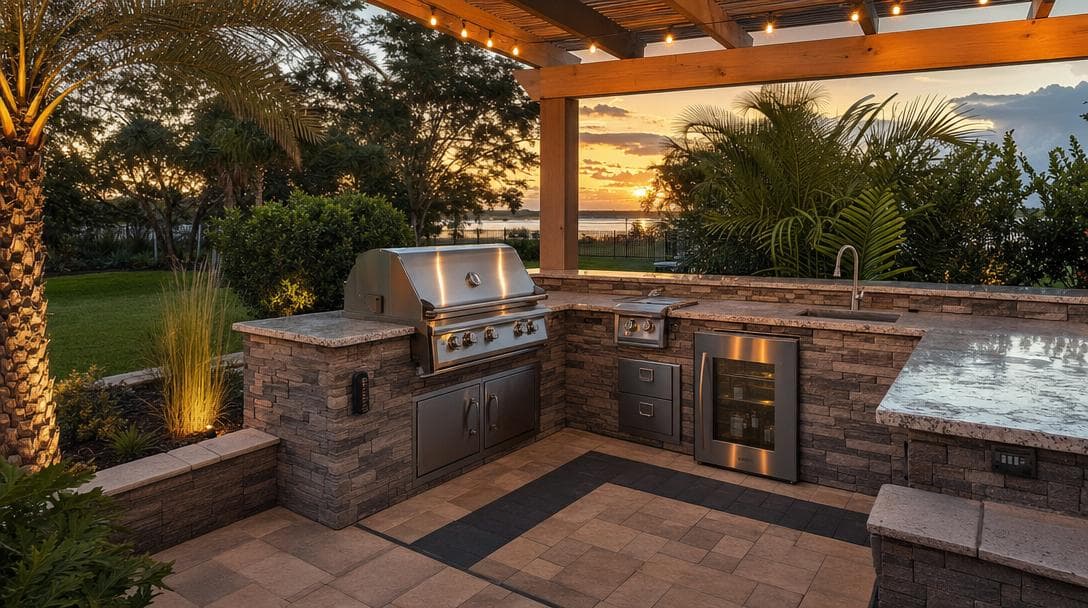
9. Outdoor Kitchen Patio
A paver surface sized and reinforced for a built-in grill, counters, and prep space. It turns a patio into an entertaining hub, and durable pavers handle grease, heat, and traffic far better than a wood deck.
Lowcountry note: One of the highest cost-recovery upgrades you can add. See our honest outdoor kitchen cost guide for real Lowcountry numbers.
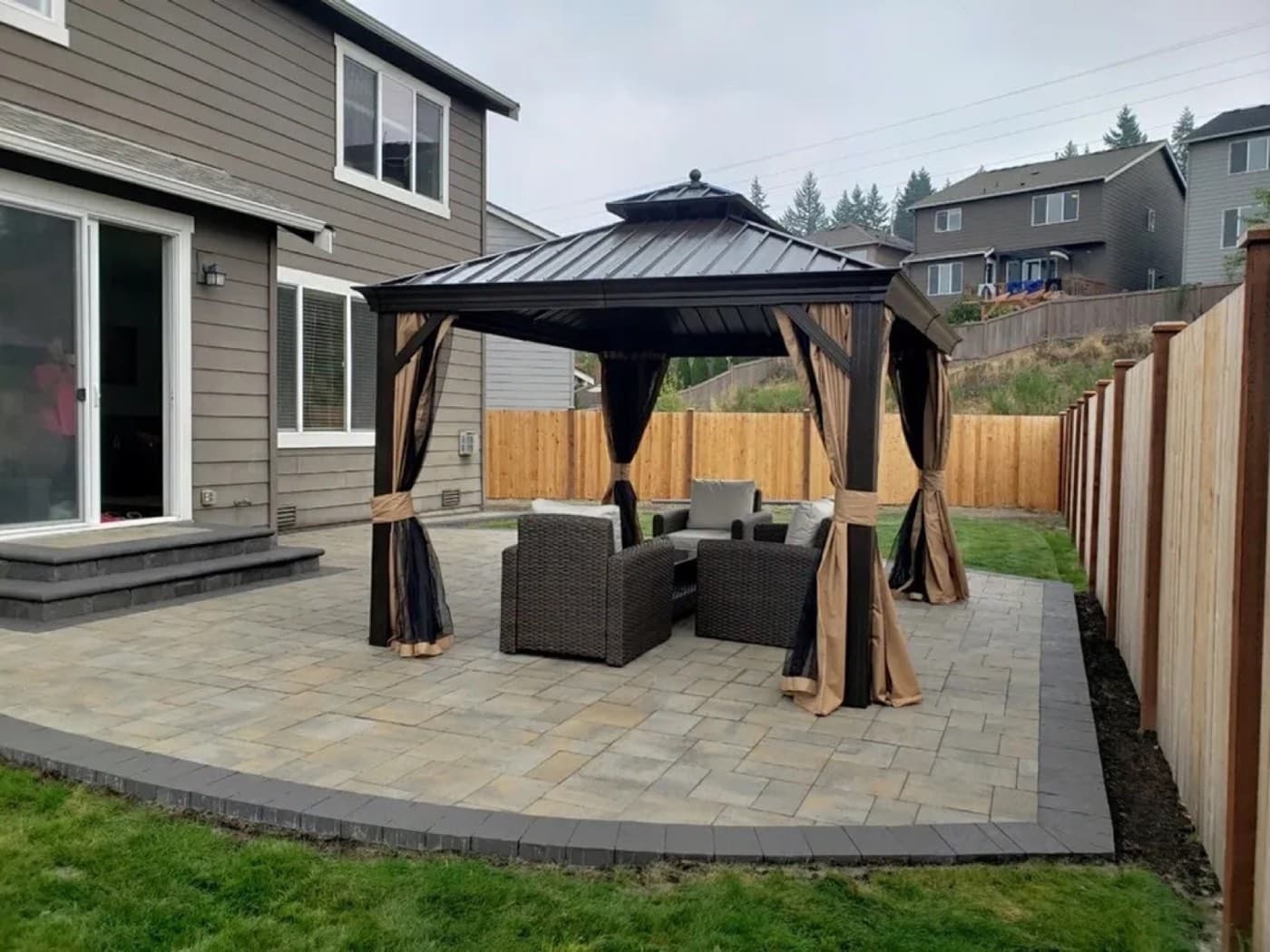
10. Pergola or Shade Structure
Pair the patio with a pergola, arbor, or shade sail. The structure defines an outdoor room, protects furniture from relentless UV, and makes the space usable through the hottest part of the day.
Lowcountry note: Shade is close to a necessity under our sun. A pergola is the difference between a patio you use at noon and one you only use after dark.
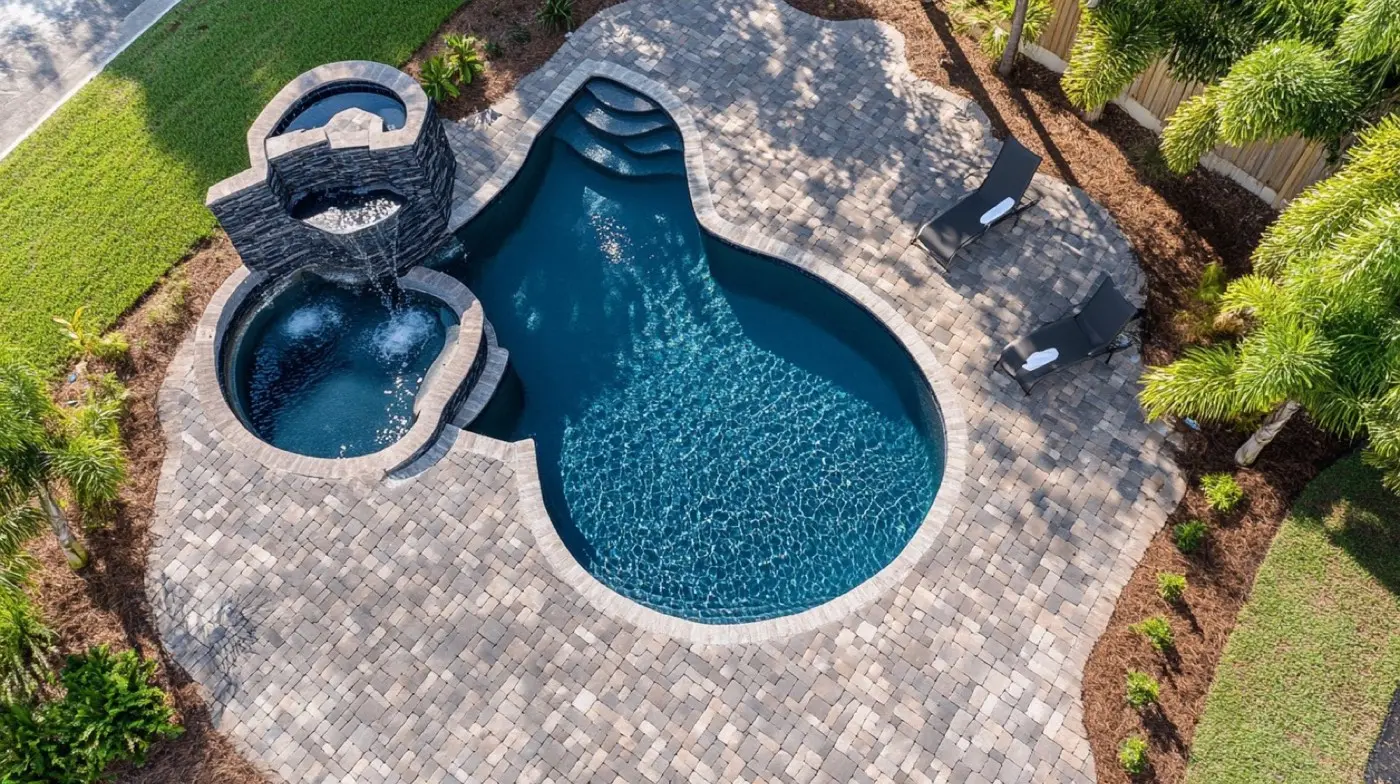
11. Pool Deck Patio
Slip-resistant, cool-to-the-touch pavers surrounding a pool. The right pavers stay cooler underfoot than poured concrete, resist pool chemicals and splash-out, and individual units lift out for plumbing access.
Lowcountry note: For pool-side work we prioritize slip resistance, a cooler surface, and drainage that moves water away from the structure. More in our paver pool deck service page.
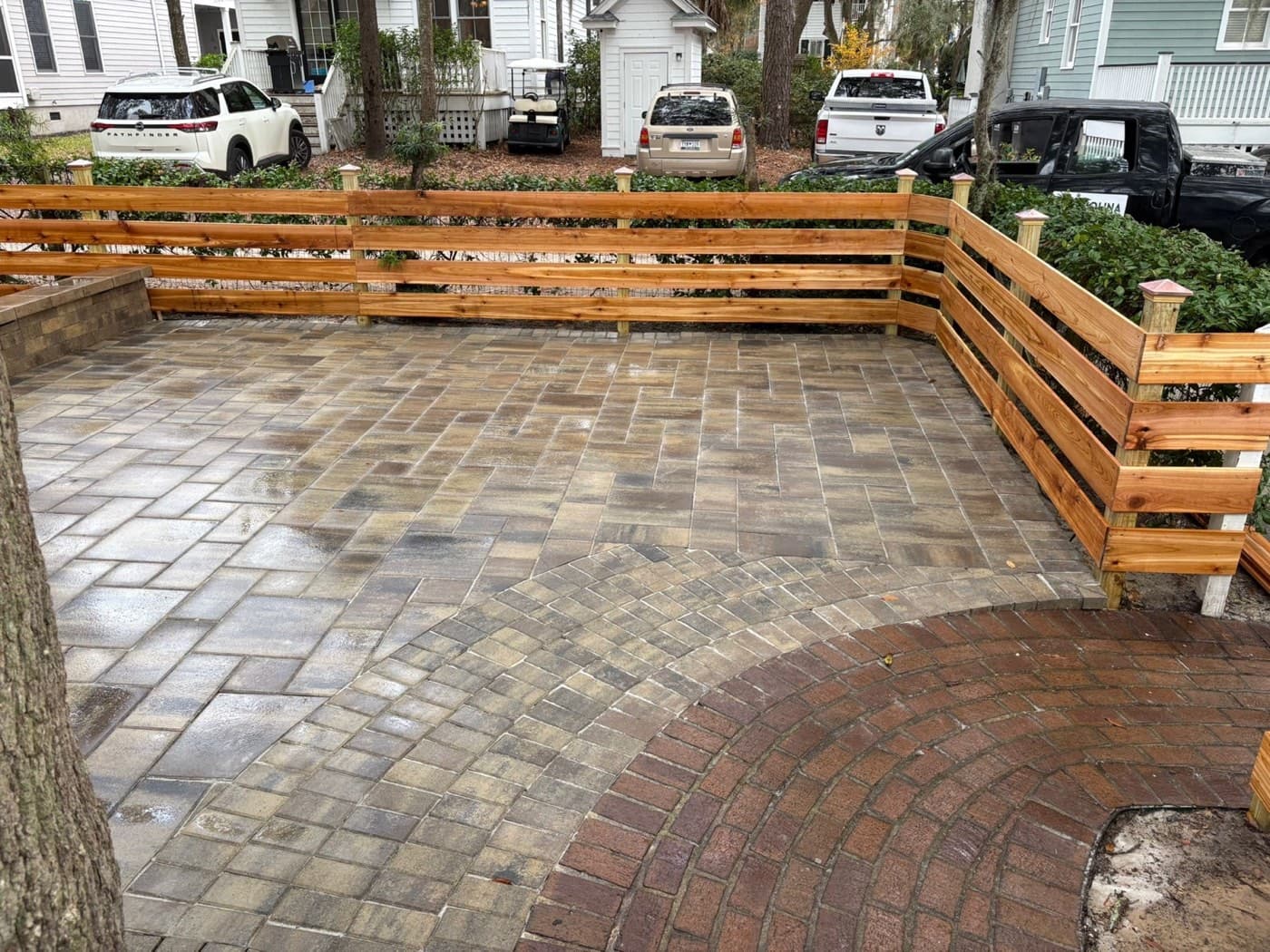
12. Courtyard / Small-Space Patio
A compact, enclosed paver area for townhomes, historic lots, or side yards. Pavers let you fit a polished, low-maintenance footprint into a tight space, and a pattern or border makes a small area feel intentional.
Lowcountry note: Perfect for the narrow downtown lots of Charleston and Savannah, where every square foot has to earn its place.
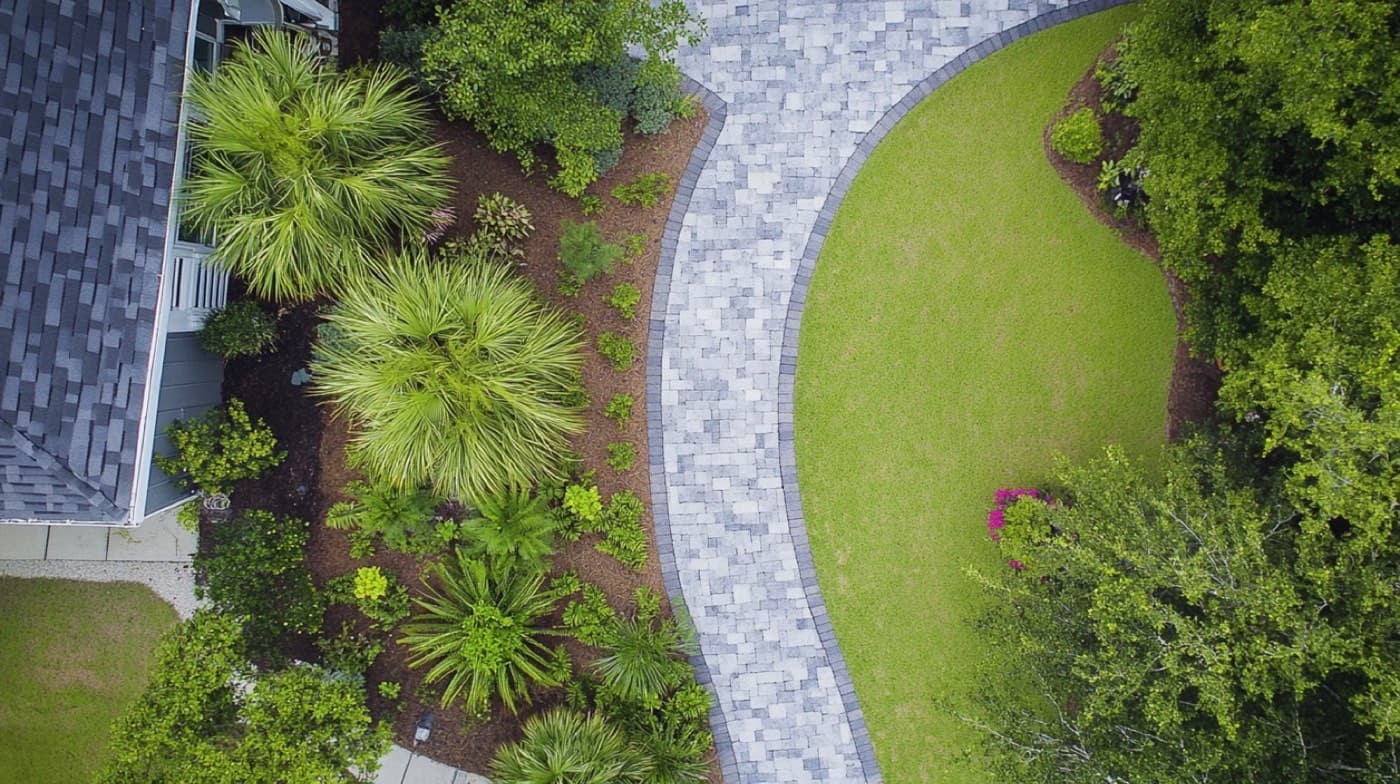
13. Wraparound Patio & Walkways
Paver paths and patio rooms that wrap the home and link the entry, side yard, and backyard into one cohesive flow. Continuous hardscape improves circulation and curb appeal and ties separate zones together.
Lowcountry note: Great for connecting a front entry to a backyard retreat on properties where the outdoor living happens all the way around the house. Pairs with our pathways and steps work.
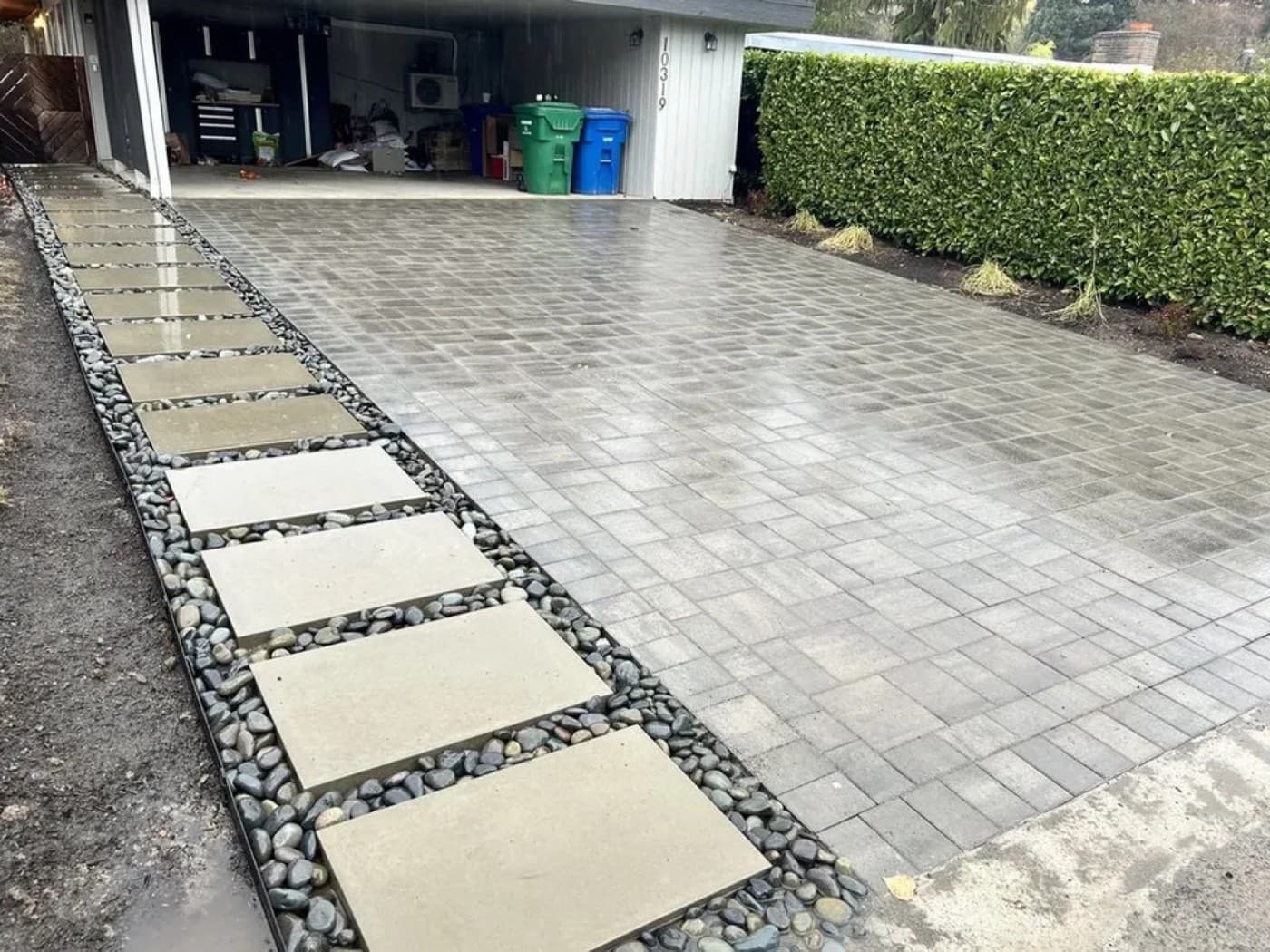
14. Permeable Paver Patio
Pavers with enlarged, aggregate-filled joints that let stormwater drain through the surface into a stone reservoir below. It reduces standing water, runoff, and erosion — and can help with drainage on flood-conscious lots.
Lowcountry note: A standout idea in the rain-heavy Lowcountry. On a low or flood-prone site, permeable is often the smartest patio you can build.
What a Paver Patio Costs — and What It Returns
Uninsured and unlicensed installers quote $20–$35 per square foot; a licensed, bonded and insured contractor with a workmanship warranty is $35–$65 per square foot. As a ballpark, that puts a 300 square foot patio between $10,500 and $19,500 professionally installed, and a 500 square foot patio between $17,500 and $32,500 professionally installed. Standard concrete pavers are the most affordable unit at roughly $2–$8 per square foot of material; brick and natural stone climb from there. Doing your own prep can save labor dollars — but on the coast, base prep and drainage are exactly where a professional install pays for itself, and poor base prep is the number-one cause of failure.
On the return side, a new patio recovered about 95% of its cost at resale and earned a 9.9 out of 10 "Joy Score" in the National Association of Realtors’ 2023 Remodeling Impact: Outdoor Features report. (You will see lower ROI figures quoted elsewhere; we cite the NAR finding because it is the one from a primary authority — treat it as a strong signal, not a guarantee.) Pavers also tend to last 30 to 50 years or more versus roughly 20 to 30 for poured concrete, and because they are segmental, a damaged unit is replaced individually instead of resurfacing the whole slab. For a deeper look at how pavers stack up against poured concrete, see our pavers vs concrete breakdown, or our 20x20 paver patio cost guide for a worked example.
Plan Your Patio
Related Reading
Frequently Asked Questions
What is the cheapest paver patio option?
Standard concrete pavers are the most affordable unit, roughly $2–$8 per square foot for material, especially in a simple running-bond pattern that minimizes cutting. Salvaged brick or a paver-and-gravel mix lowers material cost further. Handling your own prep lowers labor cost, but it is also where most DIY patios fail — the base and the drainage are the parts you cannot see and cannot fix later without tearing the patio out.
What is the most popular paver patio pattern?
Herringbone is both popular and the strongest layout — each paver is locked by six others — and its diagonal lines make patios look larger. Running bond is the most popular budget and DIY pattern because it is the easiest to lay with the least waste.
How do you make a paver patio look expensive on a budget?
Add a contrasting border or soldier course, keep to one cohesive color or a controlled blend, lay a herringbone or large-format pattern, and keep the edges crisp. Those cues read as custom without premium material cost.
How much does a paver patio cost?
Uninsured and unlicensed installers quote most paver patios at $20–$35 per square foot. Professionally installed by a licensed, bonded and insured contractor offering a workmanship guarantee, expect $35–$65 per square foot. Coastal and custom work trends toward the upper end, largely because of base prep and drainage.
Do paver patios last longer than concrete?
Generally yes. Paver patios commonly last 30 to 50 years or more, while poured concrete typically lasts 20 to 30 years before major repair. Pavers also flex with ground movement, and a damaged unit can be replaced individually instead of resurfacing a whole slab.
What are the best pavers for a coastal, salt-air climate?
Dense, low-absorption materials hold up best: porcelain (lowest water absorption), high-density concrete, shellstone or coquina, and granite all resist salt and moisture well. Travertine stays cooler underfoot in the heat but is more porous and needs sealing and maintenance.
Should I use polymeric sand or regular sand in a rainy coastal climate?
On open patios and pool decks, a coastal-rated polymeric sand usually wins because it resists washout in heavy rain. The caveat is that it can trap moisture, so good base drainage and grading matter to avoid mold or algae. Plain sand drains freely but needs frequent topping off.
Should I DIY a paver patio or hire a pro?
A small, level patio with standard pavers can be DIY-friendly, and that is genuinely the cheapest way to get a patio. Base prep, grading and drainage, multi-level work, and coastal conditions like sandy soil and heavy rain are where professional installation pays off in longevity — poor base prep is the number-one cause of failure. The honest comparison is a $20–$35 per square foot DIY or uninsured install against a $35–$65 per square foot professional install that carries our 10-year workmanship warranty.
Does a paver patio add home value?
Yes. A new patio recovered about 95% of its cost at resale and scored a 9.9 out of 10 Joy Score in the National Association of Realtors’ 2023 Outdoor Features report. Present that as a strong indicator rather than a guaranteed return, since figures vary by market.
How do I keep weeds and ants out of paver joints?
Use a quality jointing sand — ideally a coastal-rated polymeric sand — that hardens to resist washout and weed growth, keep solid edge restraints in place, and rinse or sweep the surface periodically. Reapply joint sand as needed over the years.
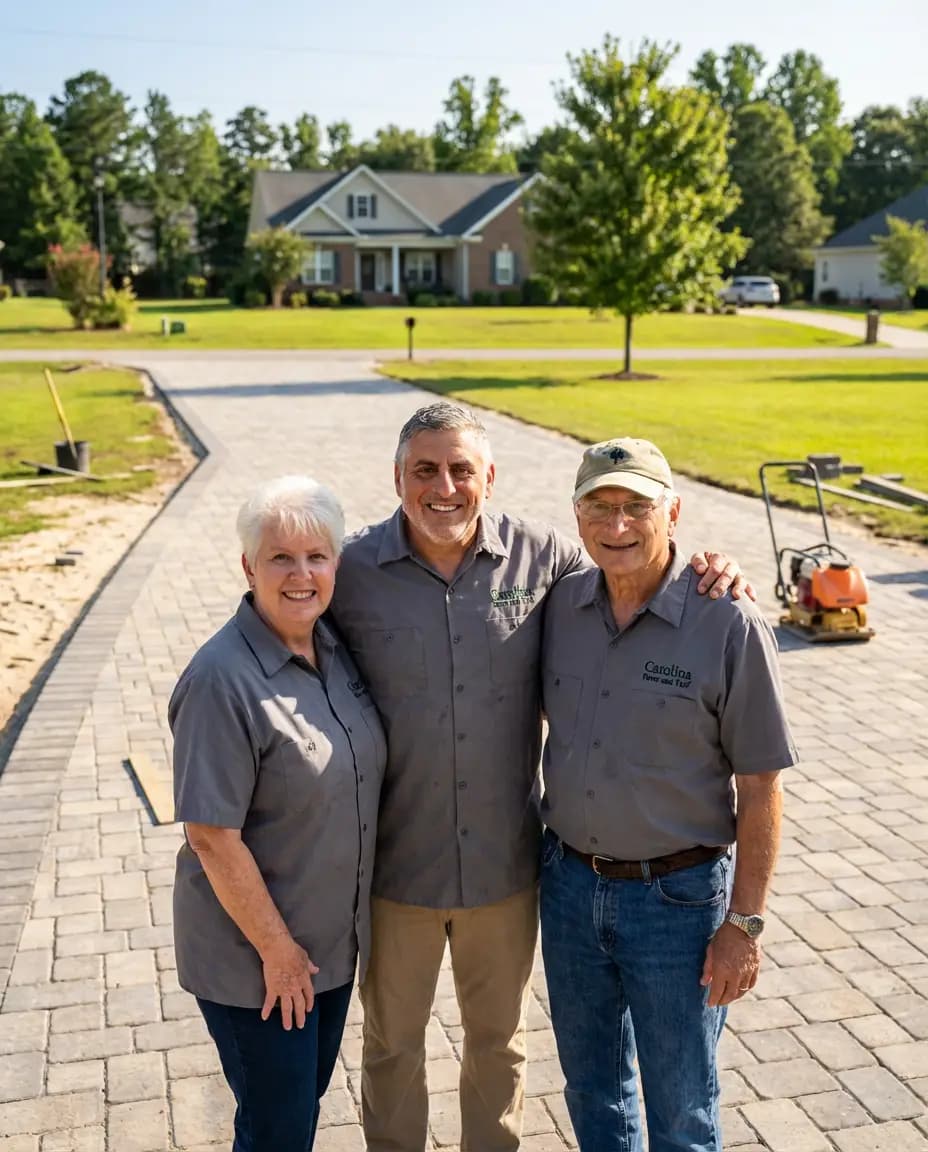
Owner, Carolina Paver & Turf
Michael Barbieri brings 10+ years of hardscape sales and construction experience, helping Lowcountry homeowners design patios, driveways, turf, and marine spaces built for coastal conditions.
Found an idea you love?
We will walk your site, talk through what holds up in your specific spot of the Lowcountry, and put a real number on paper. Free on-site assessment, no obligation.