
What Is Polymeric Sand? A Coastal Contractor’s Guide
Polymeric sand is a specially graded fine sand blended with polymer and silica-based binders, used to fill the joints between pavers. Swept dry into the gaps and then activated with water, the binders harden into a firm, flexible, grout-like material that locks pavers together and resists weeds, insects, and washout.
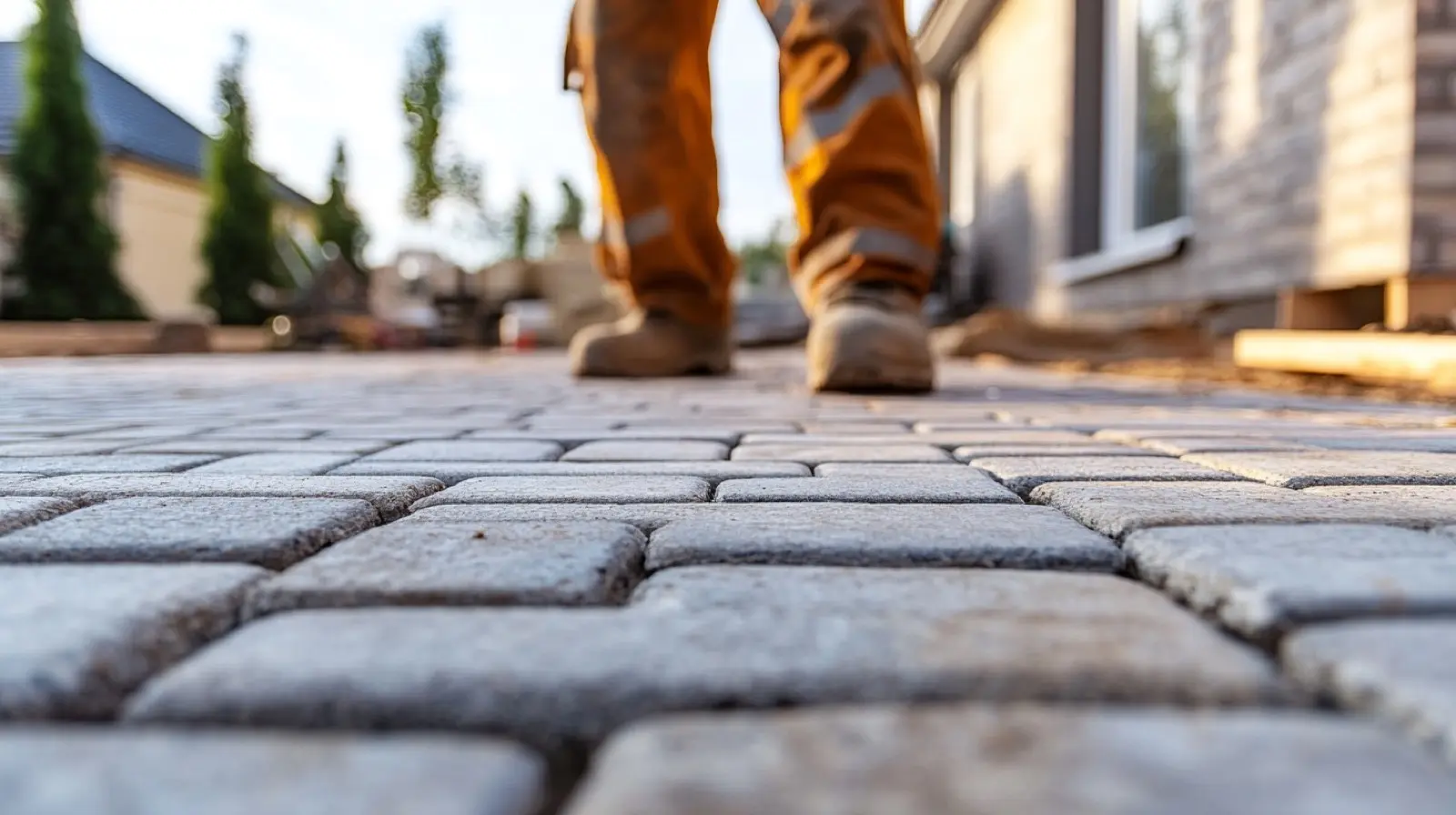
If you have ever watched a paver crew finish a patio, the last thing they do is sweep a fine sand into the gaps between the pavers and mist it with water. That sand is doing more work than it looks. It is what keeps your pavers from spreading apart, keeps weeds from sprouting in the joints, and keeps ants from tunneling underneath. We install hardscapes across the South Carolina and Georgia Lowcountry, and the joint material we choose — and how we install it — has a bigger effect on how a paver patio ages than almost anything you can see from the surface.
How Polymeric Sand Works
Polymeric sand starts as fine, calibrated sand mixed with polymer and silica binders. Dry in the bag, it behaves like ordinary sand. The chemistry only kicks in when it gets wet: water activates the binder particles, which swell and bond to the surrounding sand grains and to the edges of the pavers, turning loose fill into a firm, semi-rigid-but-slightly-flexible mass. Contractors often describe the result as a “flexible grout” — solid enough to lock everything in place, but with enough give to move with the ground instead of cracking like cement.
Installed correctly, the process goes: sweep the sand dry into the joints, consolidate it with a plate compactor (manufacturers like Techniseal call mechanical compaction mandatory), top it off, blow every speck of dust off the paver faces, then activate it with a light, layered mist of water. Once cured, it locks the pavers against shifting, blocks weed seeds from germinating up through the joints, deters insects, and resists washout from rain and irrigation.
Polymeric Sand vs. Regular Sand
The most common question we get is whether polymeric sand is really worth it over plain mason or all-purpose sand. For a finished surface, it usually is — but regular sand still has a legitimate job as the bedding layer underneath the pavers. Polymeric sand is a jointing product, not a base product. Here is how the two compare in the joints:
| Factor | Polymeric sand | Regular / mason sand |
|---|---|---|
| Bonding | Hardens into a bound mass that locks pavers | Stays loose; no binding |
| Weeds & ants | Strongly suppresses growth and tunneling | Weeds and ants move in readily |
| Washout | Resists heavy rain once cured | Needs topping off, more so with heavy rain |
| Cost | Higher per bag | Cheaper — its main advantage |
| Best for | Finished patios, walkways, driveways | Bedding layer; temporary installs |
Why Polymeric Sand Fails in the Lowcountry
Here is where a coastal contractor’s experience matters more than a national how-to. Most online guides treat freeze-thaw as the main enemy of polymeric sand — and in the Carolinas and Georgia coast, freeze-thaw is almost a non-issue. Our enemy is moisture and humidity, and nearly every failure we see traces back to it.
White haze is the number-one humid-climate failure. When binder-laden dust is left on the paver faces and then gets wet, it dries into a milky film bonded to the stone. Installing on pavers that are damp from morning dew, humidity, or recent rain — or simply over-watering during activation — does the same thing by leaching binder out of the joint and onto the surface. Techniseal puts it plainly: if the pavers are damp, the polymer will stain them. With Lowcountry dew points, pavers can be damp at dawn and dusk even on a “dry” day, so our haze window is wider than it is out west. The prevention is simple but non-negotiable: bone-dry pavers, and blow every bit of dust off the surface with a leaf blower before a drop of water touches it.
Washout is the second one. A pop-up afternoon thunderstorm that hits fresh joints before the binders set will carve channels and voids and spill sand across the surface. Cure windows are genuinely product-specific — anywhere from about 15 minutes for some quick-set products to a full 24 hours for others — which is exactly why we check the radar, build in a dry-cure buffer, and tarp the work if a storm rolls in early. Soft or crumbling joints round out the list, usually from over-watering the surface while the bottom of the joint stays dry, which forms a crust over a soft core that later cracks. The fix is a layered mist that wets the full depth of the joint instead of flooding the top.
How to Install Polymeric Sand the Right Way
Whether you hire it out or tackle a small project yourself, these are the steps that separate joints that last from joints that fail in a humid climate:
- Recess the joints to a minimum depth of about 1.5 inches so there is enough sand to bond. Shallow joints are a top cause of premature failure.
- Stay within the product’s joint-width range — commonly about 1/8 inch to 1.5 inches, though wide-joint products go further. Check the bag.
- Work bone-dry. Pavers and joints dry to the touch, no rain in the forecast for the cure window, and ideally wait at least 24 hours after significant rain.
- Sweep, then compact with a plate compactor, then top off and re-sweep so the joints are filled to just below the paver chamfer.
- Blow off all dust from the paver faces before watering — the single biggest step for preventing haze.
- Mist in layers, never flood. Light watering in stages wets the full joint depth; manufacturers suggest activating only a couple hundred square feet at a time.
- Respect the cure. Foot traffic is usually fine within a day, vehicles in 24 to 72 hours, and full hardening can take up to 72 hours depending on humidity.
- Wait about 30 days before sealing so the joints fully cure and any efflorescence has a chance to clear — and never seal over haze.
Once it is in and cured, polymeric sand is low-maintenance. The same habits that keep any hardscape healthy — sweeping off organic debris and the occasional rinse — keep the joints weed-free. For the full routine, see our guide on how to clean a paver patio, and if you are weighing pavers against a poured slab in the first place, our pavers vs. concrete breakdown covers the long game.
Common Polymeric Sand Brands
You will see a handful of names at the supply yard. Techniseal is a major manufacturer with its EZ Sand and faster-activating NextGel lines. Alliance Gator makes the Gator family — Super Sand for standard joints, Maxx and Maxx G2 for wider joints, and Nitro — with some products marketed for quick rain resistance. Sakrete is widely available at retail and publishes its own install guidance. These are common options, not endorsements; the right product depends on your joint width and the conditions the day you install. We also lean on polymeric sand well beyond patios — it is standard on our pathways and steps work, where joint stability over time really shows.
Frequently Asked Questions
How long does polymeric sand last?
With a proper installation, polymeric sand commonly lasts around 5 to 10 years before worn or high-traffic areas need a spot repair or top-up, though realistic residential performance is often closer to 3 to 7 years. Lifespan depends heavily on install quality, traffic, drainage, and climate rather than a single fixed number.
Does polymeric sand stop weeds?
It strongly suppresses weeds growing up from below, but it is not permanent. Most weeds you see on cured joints sprout from organic debris that settles on top of the sand, so periodic sweeping still matters.
Can you apply polymeric sand over old sand?
No. Manufacturers such as Sakrete and Techniseal direct you to remove the old joint sand to full depth first. Polymeric sand only bonds properly when it fills the full joint — a thin layer over old sand will fail.
How long before it can rain on polymeric sand?
It is product-specific, so always follow the bag. Techniseal EZ Sand wants roughly 24 hours of dry time with no rain in the forecast; some Alliance Gator G2 products claim rain resistance in about 15 minutes; Sakrete warns that heavy rain in the first 24 to 48 hours can wash it out. In the Lowcountry, build in a dry-cure buffer and watch the afternoon radar.
Why is my polymeric sand washing away?
Almost always it is rain or over-watering before the joints cured, joints that were too shallow, skipped compaction, or poor base drainage — not a defective product. Fix the underlying cause, then reapply.
What is the white haze on my pavers and how do I prevent it?
That milky film is polymer haze, caused by binder-laden dust left on the paver faces or by installing on damp pavers and over-watering. Prevent it by working on bone-dry pavers and blowing all dust off the surface before any water touches the joints. Never seal over haze — it locks it in permanently.
Is polymeric sand worth it?
For finished patios, walkways, and driveways meant to stay put, generally yes. It locks pavers in place, resists weeds and insects, and reduces washout compared with regular sand, which offsets its higher cost with a longer service life. Regular sand still has a role as the bedding layer or for temporary installs.
Can polymeric sand be removed?
Yes, but it is labor-intensive. You clear loose material with a broom and leaf blower, then use a low-pressure washer or a joint-cleaning tool to work out the cured sand without damaging the pavers, and let everything dry 24 to 48 hours before re-sanding.
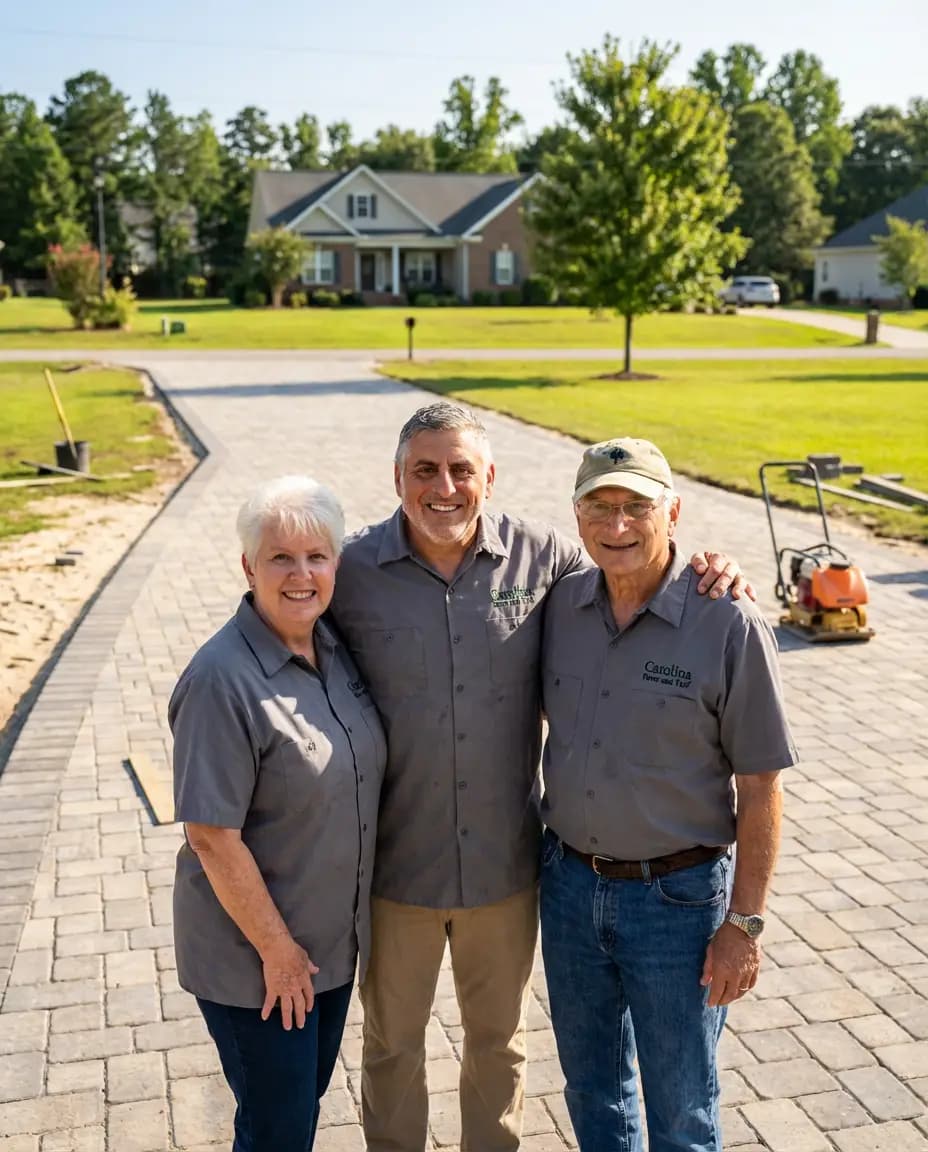
Owner, Carolina Paver & Turf
Michael Barbieri brings 10+ years of hardscape sales and construction experience, helping Lowcountry homeowners design patios, driveways, turf, and marine spaces built for coastal conditions.
Related Reading
Keep researching — these guides go deeper on what you read here.
Want it done right the first time?
We handle the joint sand, base prep, and drainage that make a Lowcountry patio last. Free on-site assessment, no obligation.