
Does Hardscaping Really Add 10–20% to Your Home’s Value? Here’s What the Research Says
Yes — but the honest range is narrower than the headline. Verified data from the National Association of Realtors and NALP shows a new paver patio recovers about 95% of its cost at resale, and a full landscape upgrade recovers 100%. Peer-reviewed research puts the home-value premium from quality landscaping at roughly 5.5–12.7%. The often-quoted “15–20%” reflects a comprehensively designed outdoor space — not a single patio — and only when the base, drainage, and design are done right.
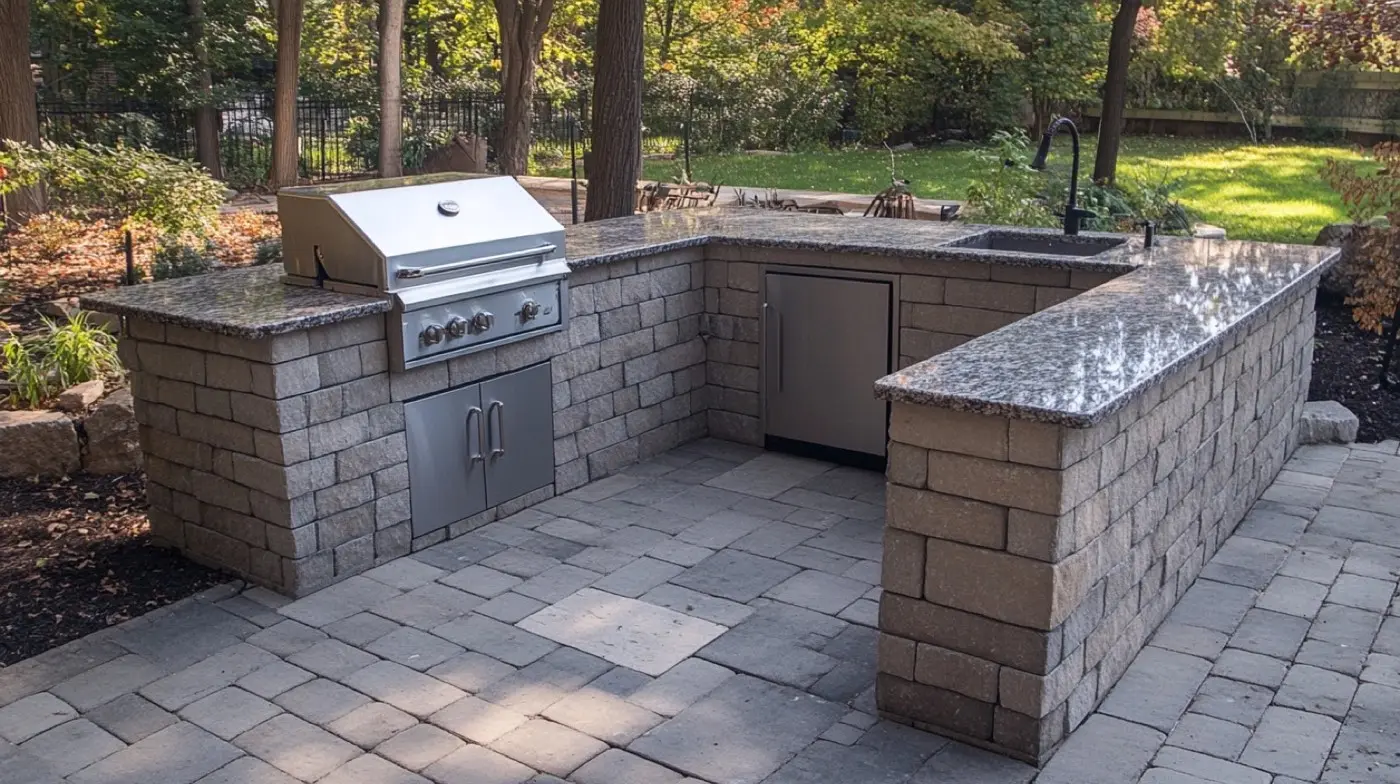
If you have talked with one of our design consultants recently, you may have heard a number that surprises most homeowners: well-designed hardscape can lift a home’s value by 10–20%. It sounds like a sales pitch. So we did what a good contractor should do before repeating a number — we pulled the actual reports. What we found is more useful than the headline: some of that range is backed by solid, primary-source data, and some of it is industry folklore that gets copied from blog to blog without a citation. Here is where the number really comes from, what the research actually supports, and what separates a patio that earns it from one that doesn’t.
The Short Answer
Hardscape adds value, but the size of the bump depends on scope. A single patio, on its own, typically recovers most of its cost and lifts resale price by a mid-single-digit-to-low-double-digit percentage. A full outdoor living package — patio, retaining walls, lighting, and landscape integration, designed and installed as one system — is what pushes toward the upper end of the range the industry cites. Scope and craftsmanship are what separate the two, and as you’ll see, the honest research numbers are more grounded than the “up to 20%” you’ll read elsewhere.
What NAR and NALP Actually Found
The strongest data on this question comes from a joint study by the National Association of Realtors (NAR) and the National Association of Landscape Professionals (NALP). In their 2023 Remodeling Impact Report: Outdoor Features, NALP estimated the typical cost of 11 common outdoor projects and Realtors estimated how much of that cost a seller recovers at resale. A few numbers stand out:
| Outdoor project | Cost recovered at resale |
|---|---|
| Overall landscape upgrade | 100% |
| Outdoor kitchen | 100% |
| New patio (stone or paver) | 95% |
| New wood deck | 89% |
| Landscape lighting | 59% |
| Fire feature | 56% |
| In-ground pool | 56% |
A couple of things worth sitting with. First, hardscape and landscape upgrades recover far more of their cost than the features people assume add the most value — a paver patio recovers about 95% while an in-ground pool recovers only about 56%. Second, and often overlooked: the report found that curb appeal is close to universally important to the people who sell homes for a living. 97% of Realtors consider it important for attracting a buyer, and 92% have recommended sellers improve it before listing. That is not a marginal opinion — it is near-consensus. (If curb appeal is your goal, we get specific about it in our guide to increasing your home’s value from the outside.)
What the Research Says About Landscaping Value
Cost recovery is one lens. The other is the outright price premium a well-finished property commands — and here the most credible number does not come from an industry group. It comes from academic research. A frequently cited study led by Dr. Alex Niemiera at Virginia Tech found that a home with quality landscaping commanded a 5.5% to 12.7% price advantage over a comparable home with none. The size of the bump grew with the sophistication of the design, the size of the plants, and how well everything worked together as a whole.
For Lowcountry homeowners, one detail is worth flagging: in that seven-state analysis, South Carolina landed near the top of the range, at roughly 11.4%. Buyers here clearly reward a property that looks finished and cared-for — which lines up with exactly what we see on job sites from Charleston to Savannah.
So Where Does “10–20%” Actually Come From?
Fair question, because no single study hands you that exact range in one sentence — and this is where we’ll be straight with you in a way most articles on this topic aren’t. Here is how it stacks up, verified pieces first:
- Cost recovery (verified): NAR/NALP data shows individual hardscape projects recovering 95–100% of their cost — a patio at 95%, a full landscape upgrade or outdoor kitchen at 100%.
- Value premium (verified): Virginia Tech’s research puts the price advantage of quality landscaping at 5.5–12.7%, with South Carolina near the top.
- The upper end, 15–20% (industry estimate): The higher figures you ’ll see quoted around the web reflect a home where the entire outdoor space — hardscape, planting, lighting, and layout — has been designed as one cohesive package. These are reasonable contractor and designer estimates, not peer-reviewed data, so we treat them as a ceiling, not a promise.
Stack a well-built patio, a retaining wall that solves a drainage problem, and landscape lighting that ties it all together, and you are squarely in the range the studies point to. One patio gets you partway there. A designed outdoor living space — with a real outdoor kitchen or fire pit as an anchor — gets you the rest of the way.
Not All Hardscape Is Created Equal
This is the part the studies can’t fully capture, because “patio” covers everything from a weekend DIY paver kit to a fully engineered outdoor living space — and the value gap between them is real. What actually drives the return:
- Base preparation. A properly excavated and compacted base is the difference between a patio that lasts 25–30+ years and one that heaves, sinks, or cracks within a few seasons. Appraisers and buyers notice the difference even if they can’t name why. It is worth knowing how deep a paver base should be before you compare bids.
- Drainage. Poor drainage planning is one of the most common — and most expensive — mistakes we see. It doesn’t just shorten the life of the hardscape; it can damage the foundation it sits next to.
- Material and design cohesion. A patio that matches the home’s architecture and integrates with the landscape reads as “finished.” A slab that looks bolted on reads as a project, not a feature — and buyers price that difference in.
- Coastal-specific engineering. In the Lowcountry, that list gets longer: clay soil, high water tables, salt air, and hurricane-season ground movement all shorten the lifespan of hardscape that wasn’t built for this environment specifically.
How Carolina Paver & Turf Designs for Value, Longevity, and Lifestyle
This is exactly why our design consultants bring up these studies in the first place — not to sell a bigger project, but because the data backs up what we see on job sites across Charleston, Mount Pleasant, Summerville, Bluffton, Beaufort, Hilton Head, and the rest of the Lowcountry and Coastal Empire. A few ways we build toward that value range instead of away from it:
- We excavate to proper depth, install geotextile fabric, and compact a graded aggregate base in lifts — the unglamorous work that determines whether a patio lasts 5 years or 30+. These practices follow the standards set by the Concrete Masonry & Hardscapes Association (CMHA), North America’s authority on segmental pavement. Our full design consultant team has completed and passed the certification courses for interlocking concrete pavement installation and segmental retaining wall installation.
- We design patios, retaining walls, fire pits, outdoor kitchens, and lighting as one integrated outdoor living space, not disconnected add-ons — which is where the studies show the real value shows up.
- We build for coastal conditions specifically: soil movement, salt exposure, and storm resilience are part of the design conversation from day one, not an afterthought.
- We back installations with a 10-year workmanship warranty, because a hardscape that is engineered correctly the first time is what protects the resale value you are trying to add.
If you want to see how the numbers play out on a single project, our breakdown of the three ways a paver patio adds value is a good next read, and if you’re still deciding between materials, our pavers vs. concrete comparison covers the long game on durability and cost.
The same installation principles apply at the front of the home. See how a paver driveway can improve property value through curb appeal, durability, and easier repairs.
Frequently Asked Questions
Does a hardscape project always add 10–20% to home value?
No. The verified research is more measured. NAR/NALP data shows a new paver patio recovers about 95% of its cost at resale and a full landscape upgrade recovers 100%, while peer-reviewed research from Virginia Tech puts the home-value premium from quality landscaping at roughly 5.5–12.7%. The higher "15–20%" figures reflect a comprehensively designed outdoor-living space — hardscape integrated with lighting, drainage, and layout — not a single feature, and only when the work is engineered correctly.
Which hardscape projects have the best return?
Per the 2023 NAR/NALP Remodeling Impact Report, an overall landscape upgrade and an outdoor kitchen each recover about 100% of cost, and a new stone or paver patio recovers about 95%. Projects that solve a functional problem — drainage, erosion, an unusable sloped yard — tend to outperform purely decorative ones because buyers and appraisers read them as fixes, not just features.
What is the most credible number for how much landscaping adds to value?
The most defensible figure comes from Virginia Tech research (Dr. Alex Niemiera, published by Virginia Cooperative Extension): a well-landscaped home commanded a 5.5% to 12.7% price advantage over a comparable home with no landscaping. In a seven-state study, South Carolina landed near the top at about 11.4%. The widely repeated "15–20%" range is an industry estimate, not peer-reviewed data.
Is a patio or a pool the better investment for resale?
For pure cost recovery, a patio wins clearly. NAR/NALP data shows a new patio recovers about 95% of its cost at resale, versus about 56% for an in-ground pool addition. A pool can still be the right call for how you want to live — but as a resale-value play, hardscape recovers far more of what you put in.
Does poor installation actually reduce home value?
Yes. A patio with a failing base or poor drainage does not just fail early — it can signal deferred maintenance to a buyer or appraiser and work against the value it was meant to add. The base preparation and drainage you cannot see from the surface are what protect the resale value you are paying for.
Sources: National Association of Realtors & National Association of Landscape Professionals, 2023 Remodeling Impact Report: Outdoor Features; Virginia Cooperative Extension / Virginia Tech (Dr. Alex Niemiera), “The Effect of Landscape Plants on Perceived Home Value.” The “15–20%” and “invest 10% of home value” figures are commonly cited industry estimates rather than peer-reviewed findings.
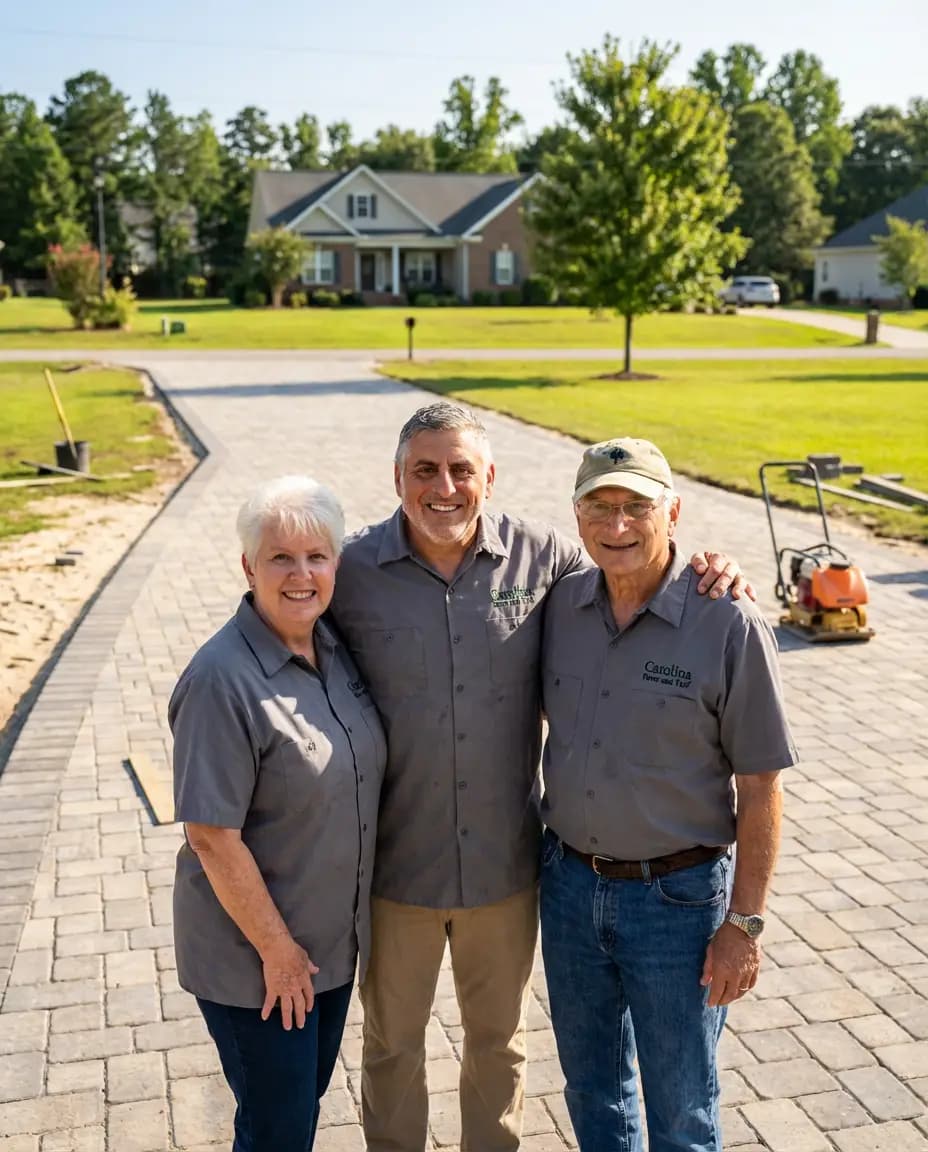
Owner, Carolina Paver & Turf
Michael Barbieri brings 10+ years of hardscape sales and construction experience, helping Lowcountry homeowners design patios, driveways, turf, and marine spaces built for coastal conditions.
Related Reading
Keep researching — these guides go deeper on what you read here.
Ready to see what your property could gain?
Our design consultants can walk your property, talk through what a cohesive outdoor living space would look like for your home, and give you a real estimate — not just a sales number. Free on-site assessment, no obligation.