3 Qualities to Look for in a Local Paver Installation Company
A paver project looks simple on paper, but long-term performance depends on details most homeowners never see. In the Lowcountry, the wrong installer can mean uneven settling, pooling water, or repairs you did not budget for. Use the three qualities below to choose a local team that builds for our coastal conditions and protects your investment.
At-a-glance: Local company vs. out-of-area crew
A local paver installation company understands how Lowcountry soil, rainfall, and salt air impact base prep and drainage. That regional knowledge shows up in the details of the quote, the materials recommended, and the warranty you receive.
| What matters | Local company | Out-of-area crew |
|---|---|---|
| Soil and drainage plan | Plans for sandy soil, marsh water tables, and heavy rain | Uses generic base depth or skips drainage details |
| Material guidance | Recommends pavers that handle coastal heat and humidity | Pushes whatever is left in the yard |
| Permits and HOA docs | Knows local requirements and submittal timing | Leaves you to figure out approvals |
| Accountability | Local references and service after the install | Hard to reach once the job is complete |
Quality 1: Local site knowledge that protects your investment
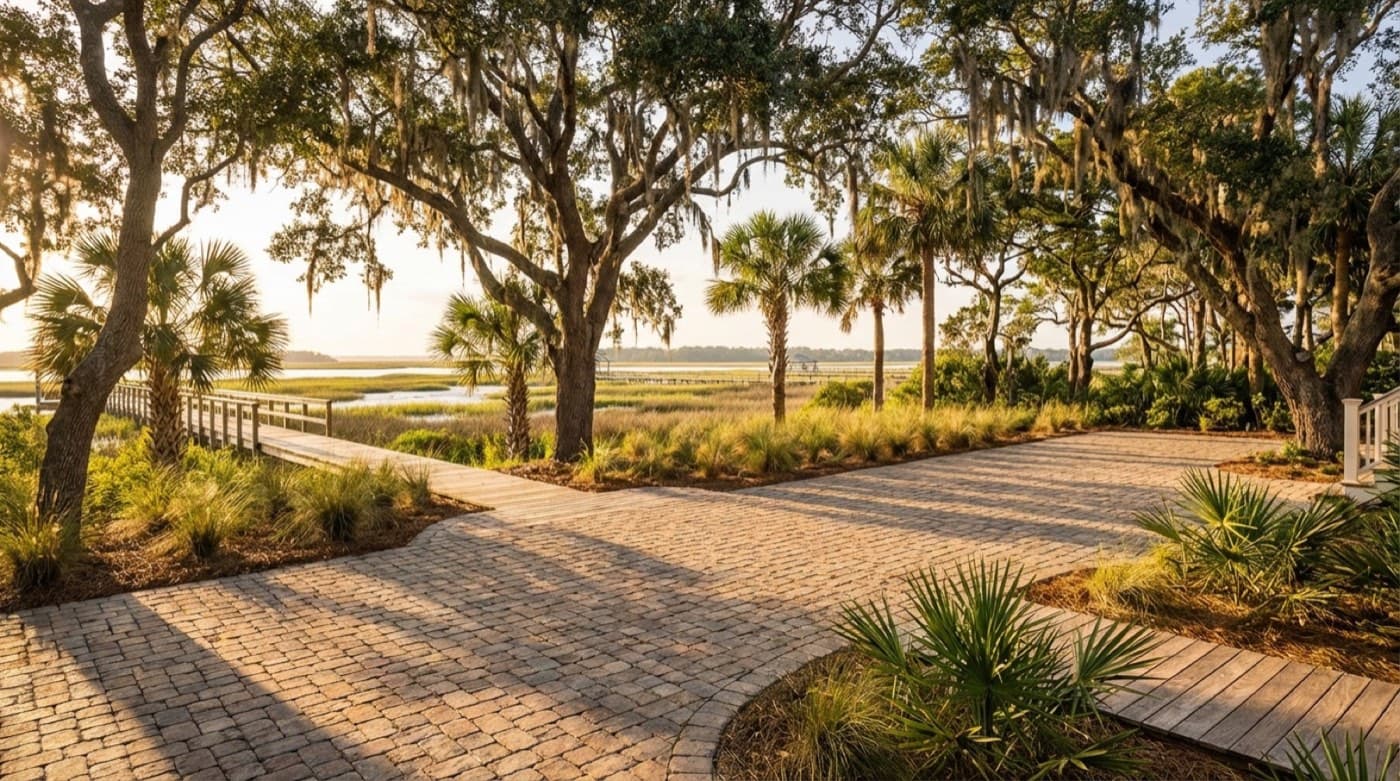
In the coastal Lowcountry, a great install starts below the surface. Look for a company that can explain how they handle sandy soil, high water tables, and rapid drainage. They should talk about base depth, compaction in lifts, and how they keep water moving away from your home.
Ask how they adapt their plans for patios versus driveways. A paver patio can often use a shallower base than a paver driveway, but both need consistent compaction and edge restraint to prevent shifting.
Quality 2: A documented, repeatable installation process
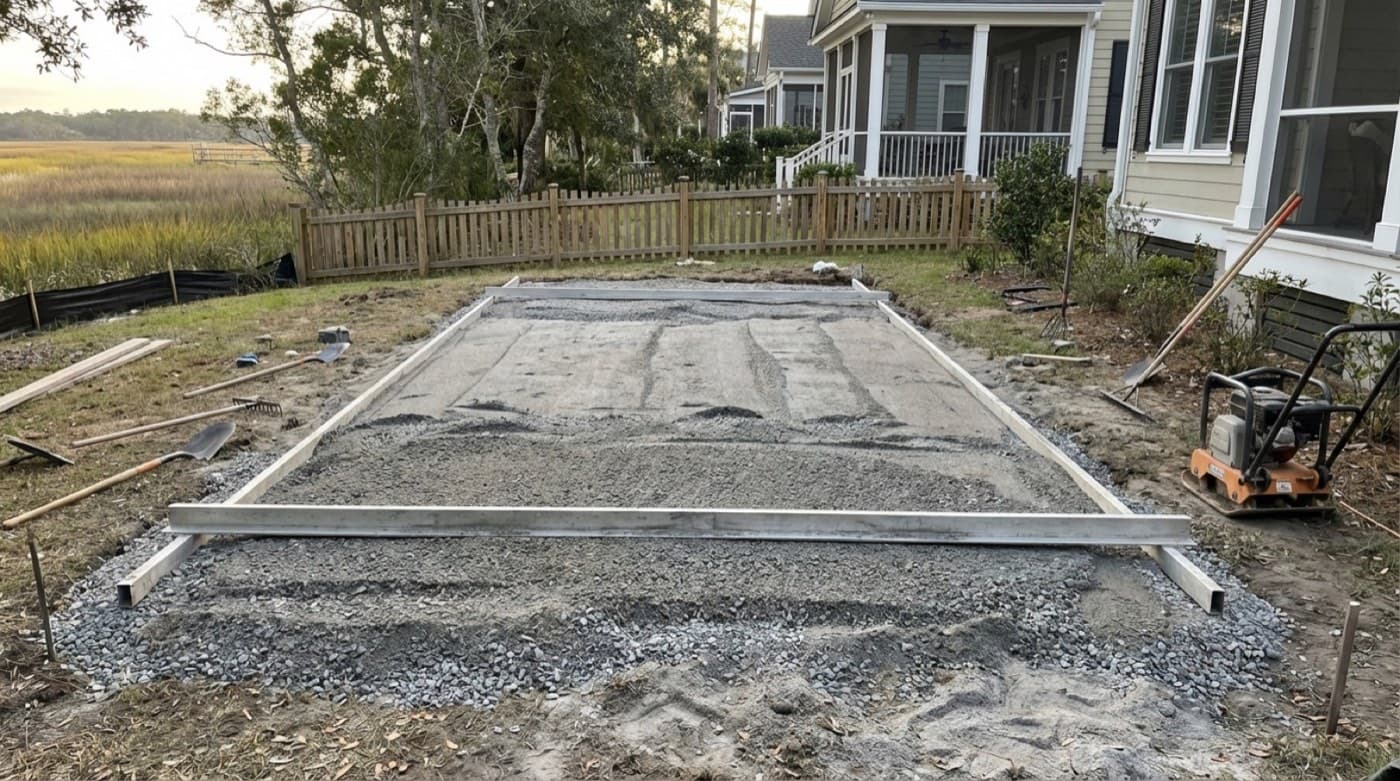
The best local teams install the same way every time because it works. You should hear a clear process that includes excavation, graded base, bedding layer, precise layout, cutting, and final compaction. If they skip steps or cannot explain them, that is a red flag.
- Base depth that matches your use case and soil type
- Compaction done in lifts to reduce settling
- Edge restraints installed before final sanding
- Drainage pitch that moves water away from foundations
Quality 3: Transparent scope, pricing, and warranty
A trustworthy local paver installation company outlines exactly what is included. The scope should cover excavation depth, base materials, paver brand, border restraints, polymeric sand, and cleanup. You should also see how they handle utilities, drainage corrections, or upgrades.
If you are comparing a pool deck to a driveway or patio, the scope should explain surface texture, slip resistance, and any sealant recommendations. That is how you avoid surprise add-ons.
Finally, ask about warranty coverage and who you call if anything settles or shifts. Local accountability matters when you need service a year from now.
Common mistakes and red flags to watch for
If any of the issues below show up during your consultation, pause and ask more questions:
- No mention of drainage or runoff direction
- Vague base depth or a promise to “figure it out on site”
- Pressure to decide quickly without a written scope
- Cannot provide recent local references
- Quote that is much lower without explaining why
Questions to ask during a design consultation
A strong consultation feels organized and educational. These questions help you confirm that the company has the right experience and process for your property:
- How deep will you excavate, and why is that depth right for my project?
- How do you manage drainage in a Lowcountry yard?
- Which paver brands or lines do you recommend, and why?
- What does the warranty cover and how long is it?
- Can you share recent local projects I can review?
FAQ
How long should a paver installation take?
Most patios are completed in 3 to 7 days depending on size, design complexity, and weather. Larger driveways or pool decks may take longer, especially if drainage changes are needed.
Do I need a permit for a paver patio?
It depends on your location and HOA. A local company should confirm requirements and handle any documentation needed for approvals.
What is a reasonable base depth in the Lowcountry?
Patios often need 6 to 8 inches of compacted base, while driveways can require 8 to 12 inches. Your installer should explain the depth based on soil and load.
How do I compare two bids?
Compare scope details line by line, including base depth, paver type, edge restraint, and drainage fixes. A higher price often reflects better prep and a stronger warranty.
Call Us for a Design Consultation
The right paver company should make you feel confident, not pressured. We help homeowners compare options, understand pricing, and design patios and driveways that fit Lowcountry conditions. Call us for a design consultation and get clear answers before you commit.
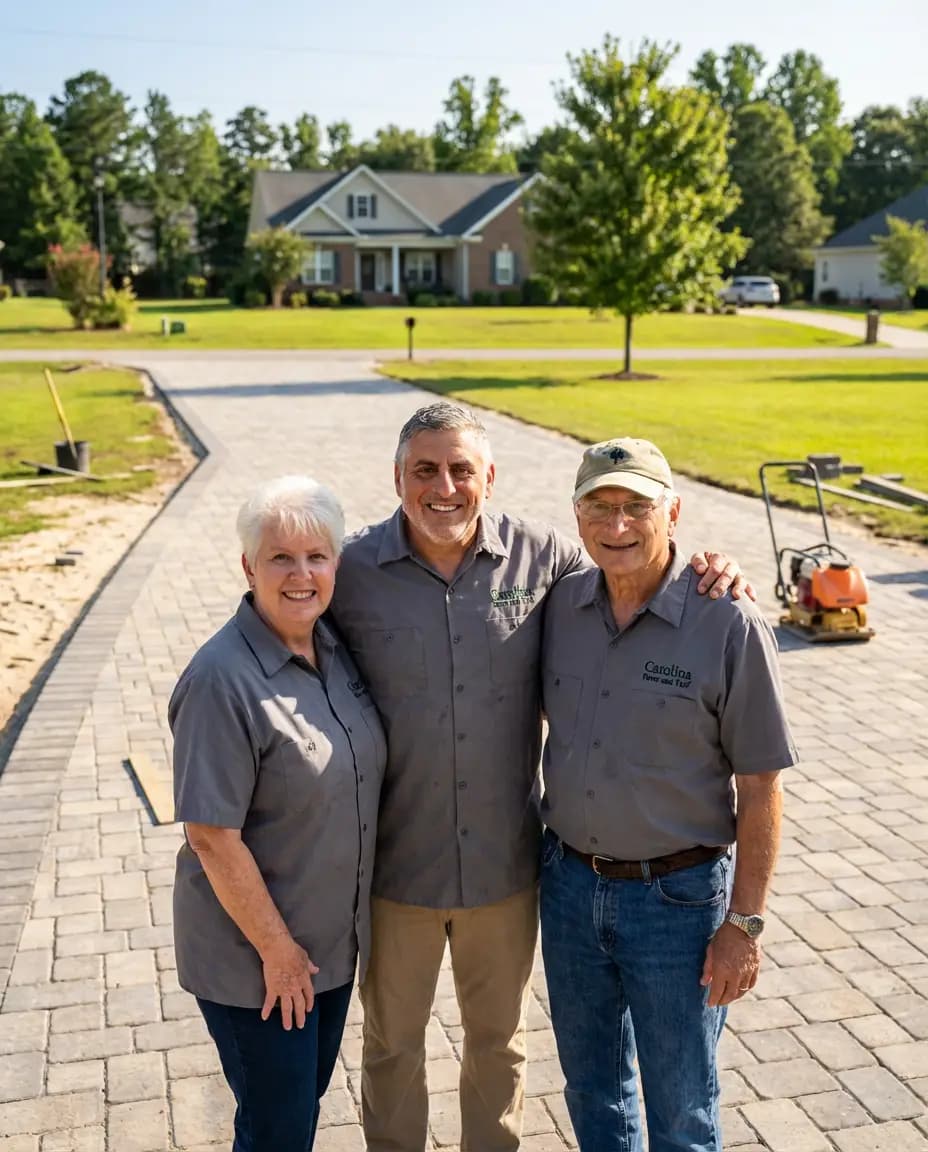
Owner, Carolina Paver & Turf
Michael Barbieri brings 10+ years of hardscape sales and construction experience, helping Lowcountry homeowners design patios, driveways, turf, and marine spaces built for coastal conditions.
Related Reading
Keep researching — these guides go deeper on what you read here.